CEBRI's first days at COP30
- Institutional
- 11 november 2025
CEBRI began its participation in COP30 by organizing and participating in debates and events alongside key players in the global climate agenda.
November 10
An Agenda of Solutions for Climate Action: Sustainable Agriculture and Responsible Mining
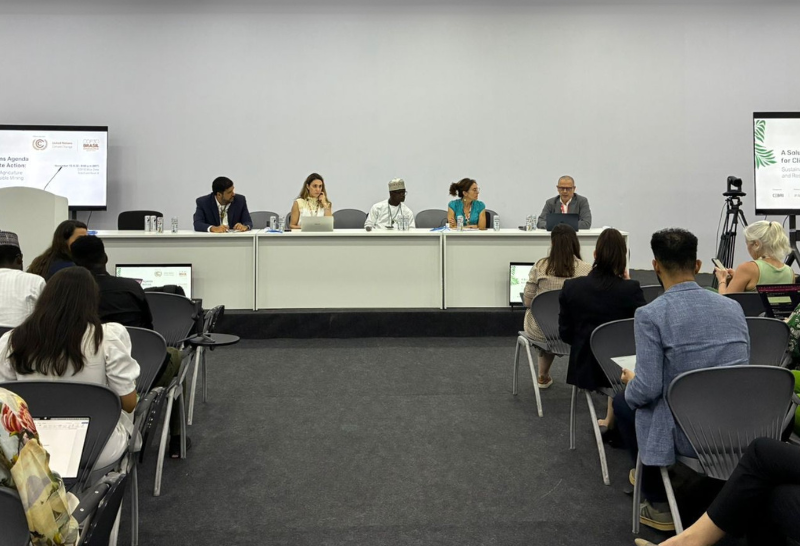
On the first day of the conference, CEBRI, together with the Arapyaú Institute, the Institut du Développement Durable et des Relations Internationales (IDDRI), the Center for Climate and Energy Solutions (C2ES), and the Climate and Sustainable Development Network of Nigeria (CSDevNet), promoted the official UNFCCC side event “An Agenda of Solutions for Climate Action: Sustainable Agriculture and Responsible Mining." The roundtable discussed ways to expand sustainable practices in these sectors through regenerative approaches, inclusive governance, strengthened international cooperation, and new technologies.
The debate highlighted the transition from the climate goal-setting phase (NDCs) to the effective implementation of commitments, with reference to the Paris Agreement's Global Stocktake (GST) and the central role of COP30, chaired by Brazil.
CEBRI Senior Fellow Rafaela Guedes pointed out that mining should be understood as an integral part of a just and sustainable transition, contributing to mitigation, adaptation, and local development.
Participants emphasized that the current climate negotiations require a shift from commitment to execution, closing the implementation gap. COP30 should establish itself as a milestone for concrete action, financing, cooperation, and integration between climate, nature, and economic development. The success of the Paris Agreement will depend less on the creation of new targets and more on the ability of countries, sectors, and financial actors to cooperate to deliver on what has already been promised.
Participants in the debate included Marta Torres-Gunfaus, Director of the IDDRI Climate Program; Kaveh Gilanpour, Vice President of International Strategies at C2ES; Ibrahim Shamsudeen, Regional Coordinator of CSDevNet; Marcelo Behar, Special Envoy for Bioeconomy of the COP30 Presidency; and Roberto Waack, Chairman of the Board of the Arapyaú Institute.
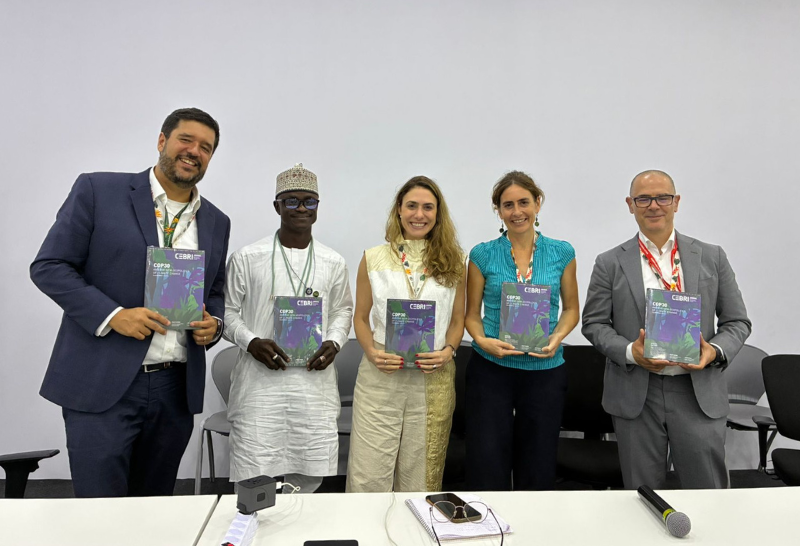
During the roundtable, copies of the new edition of CEBRI-Revista were also handed out, entitled “COP30 and the New Geopolitics of Climate Change”,
which features an editorial by Monica Sodré, Senior Fellow at CEBRI and CEO of Meridiana, as well as interviews with the president of COP30, Ambassador André Corrêa do Lago, Advisor to CEBRI, and former Minister of the Environment Izabella Teixeira, Member of CEBRI’s International Advisory Board.
Brazil's COP30 Catalyst: Corporate Climate Policy & Action
On the same day, Thais Jesinski Batista, Deputy Director of CEBRI's Climate Transition and Sustainability Program, participated in the panel “Brazil's COP30 Catalyst: Corporate Climate Policy & Action,” organized by Siemens. Moderated by Luis Felipe Gatto Mosquera, Vice President of Legal, Government Relations, and Sustainability at Siemens in Brazil, the panel discussed how different organizations have successfully mobilized the business sector, driving a robust movement focused on climate action.
During the event, Thaís shared CEBRI's vision on the intersection between climate change and geopolitics, highlighting the institution's initiatives on climate and energy transition issues and the importance of private sector leadership in this process.
November 11
The Role of Trade in Global Energy Transition
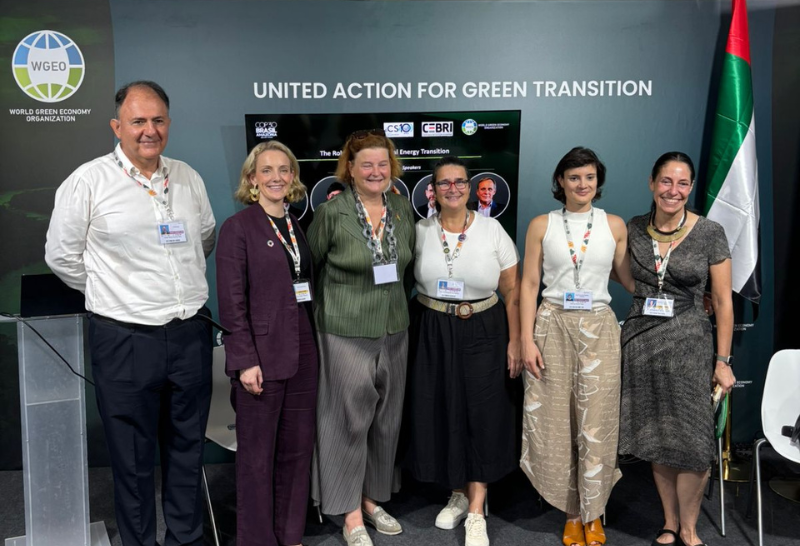
On November 11, CEBRI and the Climate and Society Institute (iCS) organized the panel “The Role of Trade in Global Energy Transition,” moderated by Mônica Sodré, Senior Fellow at CEBRI and CEO of Meridiana, which marked the launch of Jorge Arbache's paper on how international trade can drive global decarbonization.
The study demonstrates how international trade can become one of the most effective instruments for accelerating global decarbonization, generating corporate, economic, social, and environmental benefits. Among the paper's recommendations are policy coordination, harmonization of taxonomies and standards, and the creation of integrated green hubs.
Dialogue: The Efficiency Dividend
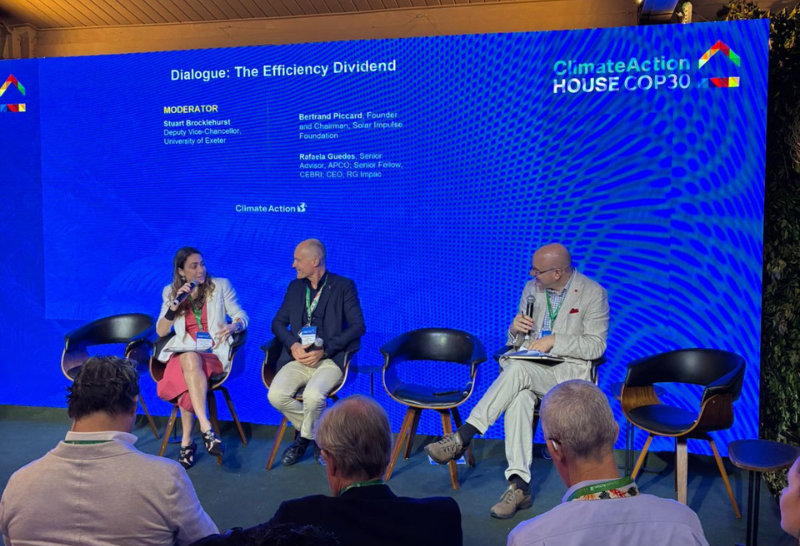
Rafaela Guedes, Senior Fellow at CEBRI, participated in the panel “Dialogue: The Efficiency Dividend,” held at Climate Action House. The debate addressed how energy efficiency, from smart buildings to more efficient lighting and electrification systems, can generate immediate reductions in emissions, lower costs, and create jobs, driving a fair and sustainable transition. In her speech, Rafaela highlighted the strategic role of energy efficiency in reducing emissions and accelerating climate transition.
The Big Ideia: Debating the Adaptation Economy
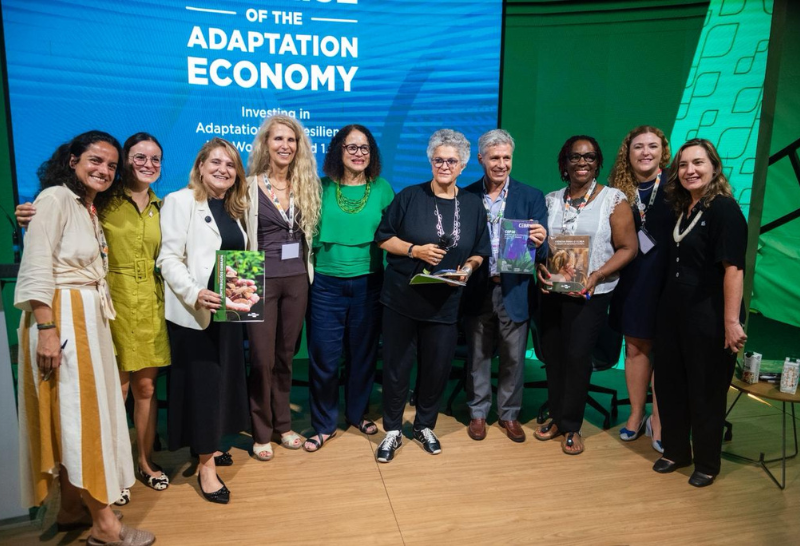
Fund hosted a cocktail reception with leaders from civil society, government, and the private sector to discuss air pollution and climate change and their impacts on health and the economyIzabella Teixeira, Member of CEBRI’s International Advisory Board, participated in the panel “The Big Idea: Debating the Adaptation Economy” at the recently inaugurated AgriZone – House of Sustainable Agriculture, an Embrapa space dedicated exclusively to sustainable agriculture.
Organized by Morphosis, Itaúsa, and Embrapa, the event discussed the report “The Rise of the Adaptation Economy” and celebrated the launch of the “Women’s Coalition for the Adaptation Economy,” an international network of women leaders committed to incorporating adaptation and resilience into global development strategies.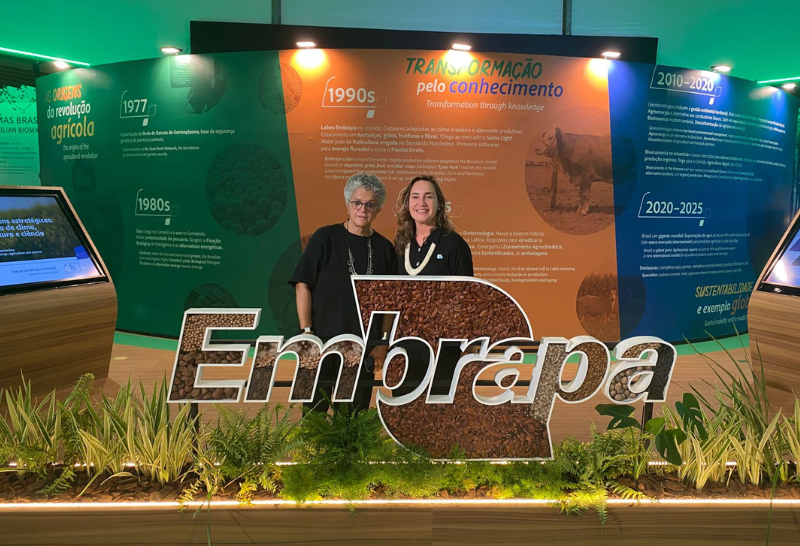
During the panel, Izabella Teixeira emphasized that climate change is redefining global governance and power dynamics. COP30 represents a milestone in this process, incorporating new actors and promoting a broader and more inclusive agenda for action. According to the former Minister of the Environment, current international governance no longer responds to the complexities of contemporary global politics, making it necessary to build new institutional arrangements capable of sustaining the advancement of the climate agenda. Climate change management needs to articulate financing, mitigation, and adaptation in an integrated manner.
Mitigation, according to Izabella, is structured around three fundamental pillars: decarbonization, electrification, and conservation. These pillars are connected by the transition of resources, marked by the growing demand for critical materials and minerals in a context of energy addition, in which new sources are added to existing ones. In this scenario, Brazil has the potential to play a strategic role in the competition between major powers, while women are called upon to take on a more provocative and transformative role in global climate governance decision-making processes.
Coquetel de networking Sobre Poluição Atmosférica e Impactos na Saúde

To close the day, CEBRI and the Clean Air Fund hosted a cocktail reception in partnership with the Global Methane Hub and the Super Pollutant Action Alliance. The gathering brought together more than 150 key stakeholders, including civil society leaders, government representatives, and private sector actors, to discuss the impacts of air pollution on climate, the environment, health, and the economy.
The opening session featured remarks by Jane Burston, CEO of the Clean Air Fund; Marcelo Mena, CEO of the Global Methane Hub; Claire Henly, Executive Director of the Super Pollutant Action Alliance; and Aline Khoury, Project Coordinator at CEBRI.
Participants underscored the importance of placing air quality at the center of climate agendas and of promoting joint action in response to the effects of atmospheric pollution.
