
-

-

-
 PT | EN
PT | EN 
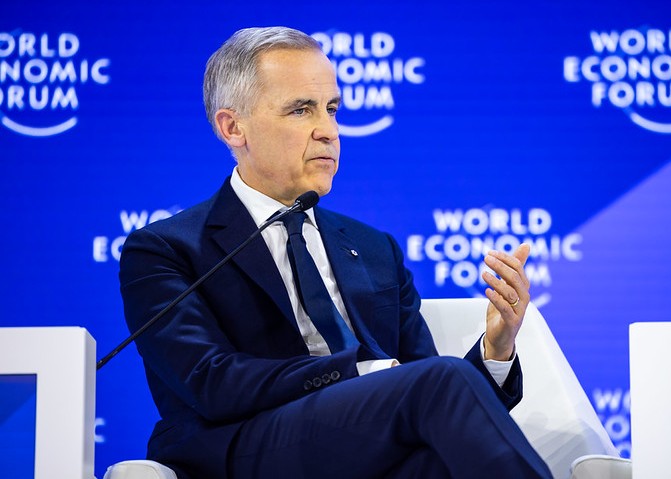
Upon reading his own obituary in a newspaper, the American writer Mark Twain famously wrote a telegram from London: “The reports of my death are greatly exaggerated.” International law finds itself in a similar position. Still reeling from existential threats to his country, the Prime Minister of Canada, Mark Carney, declared in Davos:
[…] the rules-based order is fading, […] the story of the international rules-based order was partially false […] We are in the midst of a rupture, not a transition. […] Stop invoking rules-based international order as though it still functions as advertised. […] We know the old order is not coming back. We shouldn’t mourn it. Nostalgia is not a strategy.
Criticism of international law for its perceived inability to resolve serious conflicts is nothing new. However, international law often operates in a less visible and decentralized manner. Reducing the entire global legal system to the capacity to decide on the authorization of the use of force (Article 42 of the UN Charter) is to lose sight of a vast set of norms, institutions, practices, and arrangements that guarantee predictability and cooperation. The contemporary crisis demands, rather, a more granular reading: distinguishing the political deficit of the UNSC from the normative structures that persist and adapt.
The distinction between political crisis and normative integrity has both legal and practical foundations. The Charter of the United Nations does indeed contain provisions in Chapter VII that allow the Council to authorize coercive measures, but these constitute an exception–emergency instruments for situations that threaten peace. In contrast, Article 33 enshrines peaceful means of dispute resolution (negotiation, mediation, conciliation, arbitration, procedural rules), which remain widely used. Legally, while the authorization of force depends on political alignments between major powers, the normative layer that regulates trade, transport, the environment, human rights, and telecommunications is expressed in treaties, customs, and judicial and arbitral decisions that, together, produce real effects on state and private conduct.
This resilience is visible in the figures and technical mechanisms. Data cited at the recent Davos Forum–presented by the WTO Director-General, Ngozi Okonjo-Iweala–indicate that, despite geopolitical shocks, approximately 72% of global trade continues to operate under the rules of the World Trade Organization. This percentage is not merely statistical: it reflects the existence of a system of norms and dispute-resolution mechanisms that reduce the cost of uncertainty. Where central bodies fail–such as the WTO Appellate Body, paralyzed by political blockages since 2019–institutional creativity produces pragmatic solutions. The Multi-Party Interim Appeal Arbitration Arrangement (MPIA), created in 2020, is the most compelling expression of this adaptation. With dozens of members representing significant economic blocs and composed of highly prestigious arbitrators, this ad hoc arrangement prevents trade disputes from falling into legal limbo, preserving the legal certainty essential to international trade.
Examining this example reveals the layers of normative resilience. The multiparty agreement does not reinvent trade law: it enshrines deliberately technical appeal mechanisms that reproduce the fundamentals of the WTO system, establishing arbitration precedents that guide state and business conduct. The practical effect extends beyond the arbitration screens: it imposes a real cost on acts that violate contractual and normative commitments, preserving channels of economic cooperation that no major economy is willing to abandon. In short, political fragmentation does not automatically equate to normative collapse.
This normative vitality is also evident on other fronts. There are currently over 158,000 international treaties registered with the UN, covering areas as varied as civil aviation security, telecommunications, and postal services. The daily functioning of these technical networks confirms that the world does not operate haphazardly; it operates through interdependent technical conformity that no state can break without incurring prohibitive costs. The entry into force, in January 2026, of the landmark High Seas Treaty is a recent example: despite geopolitical fragmentation, there has been the capacity to conclude and ratify instruments that protect common goods and establish collective obligations regarding environmental resources and responsibilities in the global ocean.
In parallel, the international judicial system is also asserting itself as an arena for normative production. The Advisory Opinion of the International Court of Justice (ICJ), from July 2025, on the obligations of States in the face of climate change represents a milestone: by linking the responsibilities of major emitters to international obligations and clarifying the intersection between Environmental Law and Human Rights, the Court demonstrated the capacity of International Law to address existential crises. By recognizing that climate inaction can constitute a violation of treaties and fundamental rights, the ICJ expanded the repertoire of redress and prevention, offering legal bases for future litigation and pressuring States to internalize the costs and duties of protection.
Strengthening legal standards through international courts and bodies does not eliminate gaps, but it creates instruments that function independently of the political impasses of the UNSC. The ICJ, for example, is expected to register the highest volume of cases in its history in 2026; this is no coincidence: nations continue to invest political capital in The Hague when they realize that litigation brings benefits–whether to reaffirm sovereign prerogatives or to obtain legal clarity in complex disputes. The legitimacy of the international forum persists because legal proceedings offer predictability and, often, a less costly path than unilateral confrontation.
The International Criminal Court (ICC) is another example of institutional resilience. Despite the absence of powers such as the US, Russia, and China, the ICC maintains significant membership (125 states) and operates as a mechanism of legal stigmatization and diplomatic encirclement. The issuance of arrest warrants and decisions restricting the mobility of authorities creates real prestige costs and limits diplomatic options. Thus, the ICC converts legal sanctions into instruments of pressure, raising the political price of impunity. There are, of course, criticisms about selectivity and jurisdictional limitations–criticisms that demand institutional and political responses–but the existence of the Court and its capacity to influence state decisions demonstrate that international law has real tools for accountability.
In a multipolar world, the role of middle powers and regional coalitions is gaining prominence. Recent European refusals to collaborate on unilateral interventions in the Strait of Hormuz, in favor of clear multilateral mandates, reveal an emerging pattern: middle states are opting to safeguard normative predictability as a tool to defend their interests. Similar movements appear in statements and stances from countries such as Mexico, India, Indonesia, Brazil, Turkey, and South Africa–each with its own reasons, yet all converging on the priority of predictability and the pursuit of solutions within legal frameworks.
These actors prefer instruments that reduce the risk of hegemonic voluntarism, such as regional arrangements, multilateral cooperation, and strengthened specialized institutions. This strategy is not mere neutrality; it is legal rationality. For states whose power depends on economic integration and stability, rules-based order is not an ideological choice, but an existential necessity. Normative predictability acts as an effective barrier against voluntarism and guarantees the defense of national interests without resorting to military escalation.
Given this scenario, it is worth asking: will International Law undergo a necessary revision after the current turbulent cycle? Certainly. The change that is required, however, is one of adaptation, not of recreation ex nihilo. The system ceases to be perceived exclusively as an "order of hegemony" and assumes the profile of a pragmatic coordination network. Some lines of reformulation seem urgent and viable:
The alternative to international law is not the expanded freedom of nations: it is a state of anarchy and insecurity that no modern economy is willing to endure. The practical history of recent decades teaches that, even in times of political crisis, norms, courts, and plurilateral arrangements continue to produce concrete effects–in the regulation of trade, in the protection of common goods, in accountability for international crimes, and in the strategies of middle actors seeking to insert their interests within predictable frameworks.
Therefore, rather than announcing the "death" of International Law, it is appropriate to recognize its transformation: from a supposedly hierarchical order, overseen by powerful nations, to a web of plural, competent legal instruments in the process of adaptation. This metamorphosis does not diminish the relevance of law; on the contrary, it demands greater technical sophistication, institutional creativity, and renewed political commitment. The system was never completely dead–rather, it was forced to reinvent itself.
If the diagnosis is that something needs to change, then let the change be pragmatic and guided by the principle of normative effectiveness. Strengthening courts, promoting multilateral arrangements, investing in institutional engineering, and better articulating environmental law with fundamental rights are steps that keep alive the only viable alternative: an international order governed by rules, not by sudden whims.
International law is not dead. It is, as Twain was, surprisingly alive–even if, at times, its pulse is more subdued than we would like. The challenge for the coming years is to ensure that this pulse translates into stronger rhythms, better able to keep pace with the geopolitical transformations and existential threats facing the planet.
Received: May 4, 2026
Accepted for publication: June 11, 2026
Translation published: July 8, 2026
* Translated by Theo Pereira with the support of digital machine translation tools: Google Translate (initial draft), Grammarly (grammatical and syntactic revision), and ChatGPT (selective phrasing refinements). Reviewed by the author.
Copyright © 2026 CEBRI-Revista. This is an open access article distributed under the terms of the Creative Commons Attribution License, which permits unrestricted use, distribution, and reproduction in any medium, provided the original article is properly cited.
