
-

-

-
 PT | EN
PT | EN 
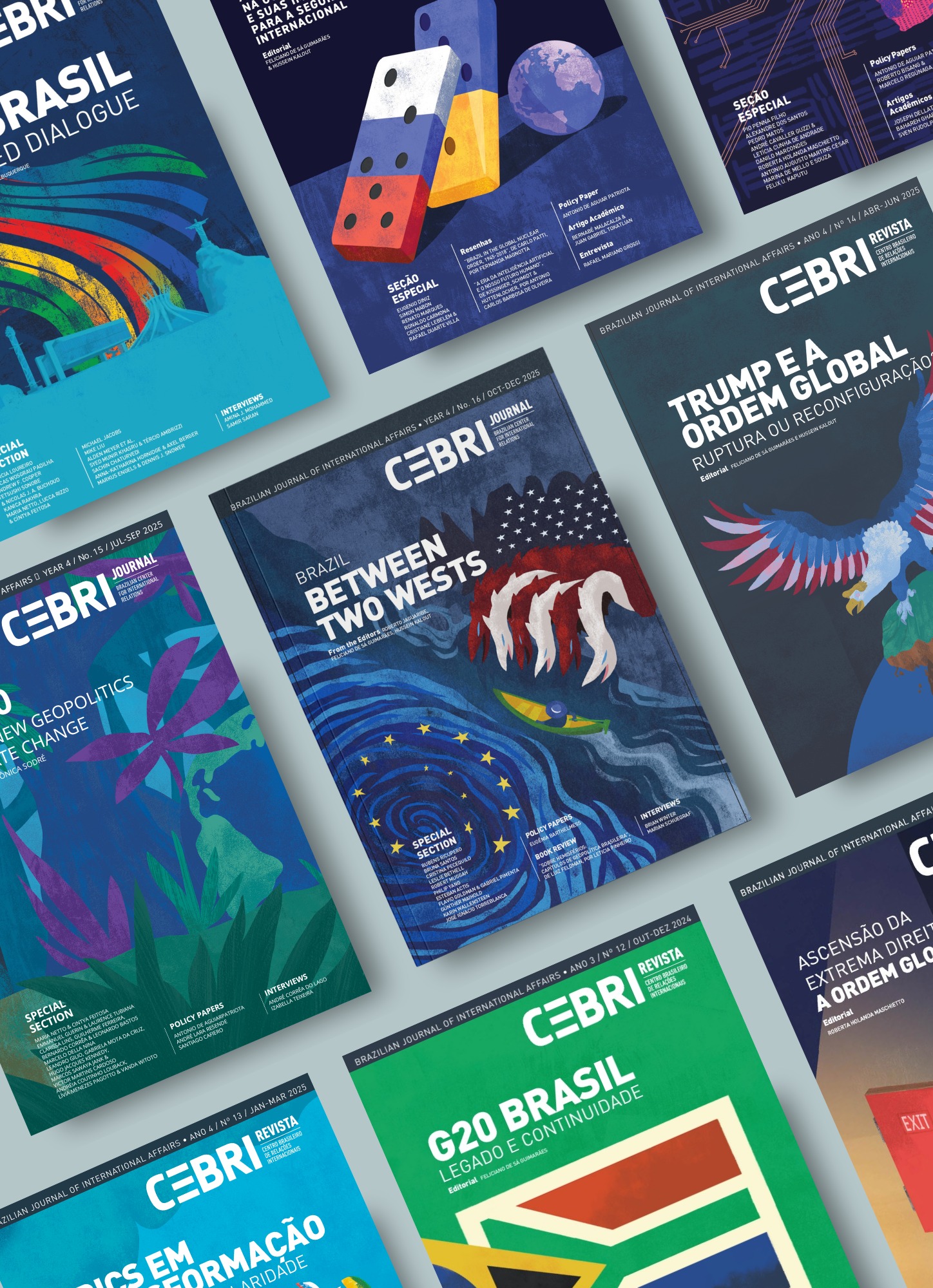
The text traces Brazil-US relations from imperial-era distance to an asymmetrical partnership, and later to bids for autonomy during the Cold War and after 1985. It argues that under Trump's second administration, the relationship became a collision, driven by political interference and tariffs. In this scenario, Brazil should, in collaboration with other middle powers, work to strengthen multilateralism.
I don’t remember exactly, but I believe it was in the first half of 1993, a few months after Bill Clinton’s inauguration. I had been Brazil’s ambassador to the United States since August 1991, during George H. W. Bush’s single term (George Bush Sr.). Invited to speak at the Foreign Service Institute in Arlington, something like Brazil’s Rio Branco Institute for diplomatic training, I was taken aback by the first question, asked as soon as I finished my opening remarks: “Are the United States and Brazil destined to clash in the future?”
I replied that I saw no rational basis for an irreconcilable clash of interests, which is not the same thing as ordinary divergences of interest, or differences in how situations are assessed. Brazil’s central objective has been, and remains, development that enables the country to realize its potential: not to amass international power, but to eradicate absolute misery and hunger, a scourge that still afflicts millions, reduce inequality, and give each person what the U.S. Declaration of Independence called the “pursuit of happiness”: the possibility, not the guarantee, of well-being and prosperity.
Today, after the profound shock produced by the second Trump administration in international and bilateral relations, I probably would not answer with the same confidence about the future.
Until the proclamation of the republican system of government in Brazil, the two countries largely regarded one another as peripheral; the relationship, marked more by indifference, was not without friction. The Brazilian Imperial Court, which decreed official mourning upon the death of the heir to the Russian Empire and the Queen Mother of the Netherlands, did not do the same when President Lincoln was assassinated. After the Regency shook off Pedro I’s baleful legacy, which had left Brazil almost a semi-protectorate under Great Britain, the Imperial government kept its distance from the British and Europeans, declining to sign trade agreements with more powerful nations. It began to move away from that line only after the Republic was proclaimed, inaugurating a rapprochement with the United States and Latin American countries. One of the first visible results was the decision to sign the 1891 trade agreement with Washington (January 31, 1891).
During the Armada Revolt (1893–1894), the U.S. Navy intervened on two occasions in support of the Republican government, which was threatened by the rebels’ naval blockade and bombardment. A few years later, Baron Rio Branco forged a close, if asymmetrical, partnership with the rising great power, the United States, especially after 1905, when both countries agreed to upgrade their diplomatic missions in Washington and Rio de Janeiro to embassies.
As the only Latin American country bordering three European countries in the age of imperialism, Brazil expected the United States–through the Monroe Doctrine - to provide protection against the era’s hegemonic imperial powers, especially Britain and France. In return, Brazil offered support for U.S. policy in the Caribbean, Central America, and Latin America more broadly–regions where many countries had border disputes with Brazil, in which we sought U.S. support or, at minimum, neutrality.
It was a realistic bargain: both sides had something to offer, and it matched trade realities. From roughly 1870 onward, the United States became the principal market for Brazilian exports of coffee, rubber, and cocoa–accounting for 36% of the total by 1912. Later, U.S. investors would overtake the British to become the largest foreign investors in our economy, a position they hold to this day.
Rio Branco was less realistic when he counted on the Americans to elevate Brazil’s status among the European powers beyond what the era’s hierarchies warranted. He was soon disillusioned at the Second Hague Peace Conference. Even so, Rio Branco built an “Unwritten Alliance” with Washington which, according to Secretary of State Elihu Root in a speech in Rio de Janeiro, rested on an explicit understanding: “not in formal written treaties of alliance, but in the universal sympathy and confidence and esteem of their peoples.” In other words, what mattered was the perception that Brazil, more than any other Latin American country, had forged close, special ties with the United States.
On the strength of that success, the diplomatic paradigm created by Rio Branco shifted from novelty to dogma–so much so that decades later Oswaldo Aranha stated, in 1950 at the Superior War College, that “no other policy is suitable for us than to support the United States in the world in exchange for its support for our political, economic, and military preeminence in South America” (Hilton 1994, 463).
In those stark terms, the former foreign minister underscored a reality that, more than anyone, he had helped to create; first at the continental level, by leading the Third Inter-American Consultation Meeting (January 1942) in Rio de Janeiro to pledge hemispheric solidarity (with the exception of Chile and Argentina) to the United States after Pearl Harbor; and soon after, by promoting the military alliance that would make Brazil the only Latin American country to participate effectively alongside the U.S. in World War II.
In contrast to Argentina’s ambiguity, Brazil emerged from the conflict militarily strengthened and politically prestigious, with the beginnings of heavy industry in Volta Redonda. It also nurtured the illusion that it had earned a significant role in reconstructing the postwar world, hoping to become the “sixth permanent member of the Security Council,” as it was then called. This repeated the earlier mistake of inflated expectations: 25 years before, favored by U.S. backing at the Paris Peace Conference at the end of World War I, Brazil came to believe it would become a permanent member of the Council of the League of Nations.
At the same time, in 1946, Brazilian leaders were setting themselves up for another disappointment by believing they deserved a Marshall Plan like Europe’s, without grasping the shift in strategic priorities. That fantasy took a long time to fade, resurfacing under JK as Pan-American Operation (1958): an implausible scheme to persuade Eisenhower-era Republican conservatives to allocate public resources to Latin American governments for industrialization and infrastructure.
Repeated disappointments were not enough to push Brazilian leaders toward neutrality or opposition to Washington. In the Cold War climate, the ruling class’s solidarity with the Western Cause–written, as it were, in all caps–spoke louder. Far from being seen as a disgrace, “automatic alignment” was framed as self-interest. After all, in confronting the Soviet Union abroad, the Americans were doing nothing different from what Brazilian conservatives under the Dutra government were doing at home in combating communist subversion as an existential threat. Hence Brazil’s role–once again–as promoter, at the Quitandinha conference (1947), of the Inter-American Treaty of Reciprocal Assistance (TIAR), the first in a network of alliances that would culminate in the main one, NATO, in the Washington Treaty (1949).
Something, however, had broken down, and Brazil would not take part in the Korean War, which began in 1950. As expectations eroded, fertile ground also emerged for a view of the United States as the personification of imperialism–and a threat to world peace–to take hold, under the influence of rising nationalism (the creation of Petrobras, for example) and Marxism. In Getúlio Vargas’s 1954 suicide note, a new mythology was born: attributing the Brazilian people’s ills to “decades of domination and exploitation by international economic and financial groups,” and to an “underground campaign of international groups” allied with domestic groups–a code that at the time pointed to the powerful Yankees, since the exhausted Europeans or Japanese were still recovering from the ravages of World War II.
From that conjunction of factors, or, in reaction to them, emerged the first serious schism within the circles that had always set foreign policy. Abandoning the tacit presumption that Brazilian strategic interests essentially coincided with American and Western ones, an influential faction found in Jânio Quadros the politician whose electoral success made room for the Independent Foreign Policy (PEI). Its guarantor and first architect was Jânio’s foreign minister, Afonso Arinos de Melo Franco. Always relative to someone or something, “independence” in 1961 meant diverging from the United States on Cuba under Fidel Castro, arguing that Brazil’s strategic interests did not necessarily coincide with the American position on this crucial issue for hemispheric security.
From there, the divergence expanded to issues such as national liberation movements in Africa’s colonies, trade and economic ties with the USSR and the communist bloc, recognition of the People’s Republic of China, and Brazil’s ambivalence during the Cuban Missile Crisis in 1962. Developed by San Tiago Dantas and Araújo Castro, the PEI essentially consisted of refusing to view the world solely through the Cold War prism. Never accepted–or even tolerated–by Washington, this orientation would be one factor leading the United States to actively encourage and support the conspiracy to overthrow João Goulart and, subsequently, to assist the military regime’s first steps from 1964 to 1967.
This capacity to influence–and to subvert–the course of Brazilian history, already tested on a smaller scale during the Armada Revolt at the end of the nineteenth century, underscores the fundamental power gap that made the Brazil-United States relationship the most asymmetrical and consequential of all our diplomatic relationships.
The military regime’s first three years, under Castello Branco, marked the peak of U.S. economic assistance and a return to diplomatic alignment under the doctrine of “ideological borders”: the break with Havana; intervention in the Dominican Republic; and foreign minister Juracy Magalhães’s line that “what is good for the United States is good for Brazil,” a popular rendering of the idea of coinciding strategic interests. That this was not quite true became clear in Washington’s growing disapproval of the regime’s dictatorial turn; the termination of economic aid in 1967; Brazil’s refusal to send troops to Vietnam; disagreement over Brazil’s decision not to adhere to the Nuclear Non-Proliferation Treaty (1968); and U.S. condemnation of AI-5.
Despite these signs of growing estrangement, cooperation against Allende in Chile and other leftist challenges resumed in the first half of the 1970s, between the repressive Médici government of the “economic miracle” and the Nixon-Kissinger duo in Washington. Nixon’s unfortunate ad-lib–“as Brazil goes, so will go the rest of the Latin American continent” (December 1971)–was matched by an intense correspondence of consultation between Kissinger and his interlocutor “dear Antonio,” the foreign minister Antonio Francisco Azeredo da Silveira. That illusion of renewed closeness did not last: it was shattered by Jimmy Carter’s arrival in the White House and his post-1977 campaign for human rights and against the Brazil-Germany Nuclear Cooperation Agreement (1975).
In response, Geisel denounced the military agreement with the United States. Since 1974, Brazil had already adopted the diplomacy of “responsible pragmatism” championed by Minister Silveira, which in some respects reconnected with the spirit of the Independent Foreign Policy by asserting autonomy on issues such as recognizing the independence of Angola and Mozambique, establishing relations with Beijing, distancing Brazil from Israel, and supporting the UN resolution that treated Zionism as racism. With one or two later adjustments, such as on that anti-Zionist resolution, this increasingly autonomous line would be pursued for the remainder of the military regime.
After redemocratization in 1985, this approach consolidated, in broad outline, into a “consensus diplomacy” under Tancredo, Sarney, Collor de Mello, and Itamar. It arguably reached its high point during the two terms of Fernando Henrique Cardoso (1995–2002) and Luiz Inácio Lula da Silva (2003–2010), gaining prestige and global influence.
It came to an end with the USSR’s disintegration into fifteen new countries (1991), the geopolitical cataclysm that began in October 1989 with the fall of the Berlin Wall, and the disappearance of communist regimes in Eastern and Central Europe. The end of the Cold War removed the argument that had most supported the thesis of coinciding interests. Even shortly before that, Brazilian foreign policy was already diverging from that of the United States on important issues. When Saddam Hussein invaded Kuwait, Brazil declined to join the U.S.-led “coalition of the willing,” because our national interest prioritized rescuing the hundreds of Brazilian construction company Mendes Júnior workers held hostage by the Iraqi tyrant. We did not resent the fact that Argentina sent two warships and was designated one of the United States’ principal allies outside NATO.
More than thirty years have passed since the episode I recounted at the Foreign Service Institute. The era of U.S. unipolar power came and went. Starting in the mid-2000s–and clearly by around 2015, perhaps earlier–Obama began to signal a strategic shift toward China and East Asia, the so-called “pivot to Asia.” Around the same time, in 2014, the strategic challenge posed by Russia became increasingly evident following the annexation of Crimea and support for Donbass separatism. This ushered in a period of conflict and alarming erosion of norms and standards in the international system which, in some respects, evokes the Cold War–at least in the division of the world into hostile alliances and the growing militarization of conflicts.
Over the same three decades, Brazil evolved economically, regained a minimum degree of monetary stability, and overcame the chronic threat of external strangulation by accumulating reserves–made possible by pre-salt oil and by diversifying exports of mineral and agricultural commodities. The reduction in external vulnerability was driven mainly by China’s demand for commodities and, increasingly, by Asia as a whole. This new reality–more diversified foreign trade focused on Asian markets (about 50% of export destinations), and demand centered on primary products–inevitably shaped Brazil’s diplomatic choices.
While Brazil was undergoing this evolution, U.S. strategic interests drove sharp changes in economic and security priorities. Having moved beyond Cold War-era fears, Washington turned its attention to other troubled regions. In Latin America, it focused on issues such as migration and drug trafficking and, for several years, on promoting free trade agreements, symbolized by the proposed FTAA. That proposal never became attractive or convincing for Brazil and other Southern Cone countries, which lacked Mexico’s geographic proximity and the maquiladora model (or anything comparable). Moreover, they competed with the United States in agricultural exports, and U.S. offers of meaningful market access in that area were nonexistent or minimal.
Even that phase of promoting free trade agreements, strong in the Clinton years, gradually faded, giving way to an unprecedented reality: successive Trump and Biden administrations distanced themselves from the principles of the multilateral trading system they had created and upheld in the postwar period. For someone like me–who, through most of the Uruguay Round at the GATT (I was head of Brazil’s mission in Geneva and the country’s chief GATT negotiator from 1987 to 1991), had to endure pressure and scolding on everything from industrial policy and domestic job protection to the desire to preserve an industrial base–it has been astonishing, almost hard to believe, to see the United States now champion many of the very tools it once abhorred.
I do not regret this shift, because in many respects it amounts to adopting what developing countries have always sought: greater “policy space,” more flexibility to pursue gradual liberalization, and room to promote sectors where competitiveness can be built with the right incentives.
It is unfortunate that Donald Trump’s return to power–in a second term both revised and worse–triggered a regrettable rollback in values and aspirations and worsened the response to major global problems, beginning with what I would call the “mother of all threats” to the survival of human societies: global warming. The United States’ second withdrawal from the Paris Agreement on climate change greatly complicates the already difficult fight against global warming, on the eve of COP 30 in Belém. Unable to count on U.S. cooperation, Brazil, as host of the event, and other committed countries, such as those of the European Union, will have to redouble their efforts to keep the process of building climate consensus alive.
The fight against another major global threat, pandemics, has also suffered a severe blow as a result of Trump’s decision to withdraw the United States from the World Health Organization (WHO). The same posture of questioning and undermining multilateral institutions and processes puts at risk an international system based on norms and on decisions reached democratically through dialogue and negotiation. As with climate change, the pernicious actions of the current U.S. government will have to be offset by others’ intensified efforts in the opposite direction. This is one of the most serious challenges the international community has faced in the eighty years since the end of the war.
In the search for practical solutions to the major real issues–world hunger; the eradication of absolute poverty; the reduction of inequalities; and the urgent need to update multilateral institutions, beginning with the UN and its Security Council, for a changing and demanding reality–Brazil’s worldview, priorities, and sensibilities collide with the vision and interests of Trump’s United States. It is clear that our reading of what China’s rise represents, for example, or our assessment of conflicts in the Middle East, will bear the imprint of Brazilian national interests and of our aspiration to a role commensurate with Brazil’s specific weight–its population–and its diplomatic tradition of peaceful, original action.
More than ever, Brazil will have to concentrate its diplomatic capacity, both analytical and operational, on working with like-minded countries to defend an international system grounded in the norms and standards of the UN Charter and the major conventions on human rights, the environment, gender equality, anti-racism, and non-discrimination. In other words, the solid foundation of our international action lies in our commitment to values and aspirations aimed at the steady advancement of humanity’s moral and ethical consciousness.
In bilateral terms, we are living through one of the most delicate moments in two centuries. During the first six months of Trump’s second term, there was no direct presidential-level dialogue with Lula[1]. No attempt was made to arrange such a meeting, given the considerable risks; above all the evident incompatibility between the two leaders and Trump’s unpredictability[2]. Until June 2025, Brazil seemed to be off Washington’s radar. The low priority assigned to the relationship was also reflected institutionally in the absence of a formal appointment of a new ambassador to Brazil[3]. Maintaining that diplomatic vacuum signaled a disconnect between the two countries and narrowed the space for structured cooperation.
On July 9, 2025, the situation deteriorated unexpectedly after a Trump message, sent through unofficial channels, that amounted to gratuitous meddling in Brazil’s domestic political affairs. In it, the U.S. president accused Brazil’s judiciary of politically persecuting former president Jair Bolsonaro and of imposing judicial “censorship” on U.S. social-media platforms. Under the misguided pretext of correcting a nonexistent trade deficit, he also announced a punitive 50% tariff on Brazilian exports, effective August 1.
On July 15, the Washington government decided to examine alleged Brazilian “unfair trade practices” by launching an investigation under Section 301 of the Trade Act. A unilateral mechanism without the neutral oversight provided by WTO proceedings, a Section 301 investigation allows the United States to act as both accuser and judge in its own case. One possible explanation for choosing this legal tool in Brazil’s case is that it served as an indirect response to Paul Krugman’s writings, which questioned the U.S. president’s legal authority to impose tariffs for political reasons. Those criticisms may have alerted White House advisers to the initial measure’s legal fragility, prompting them to seek a more formal justification under Section 301.
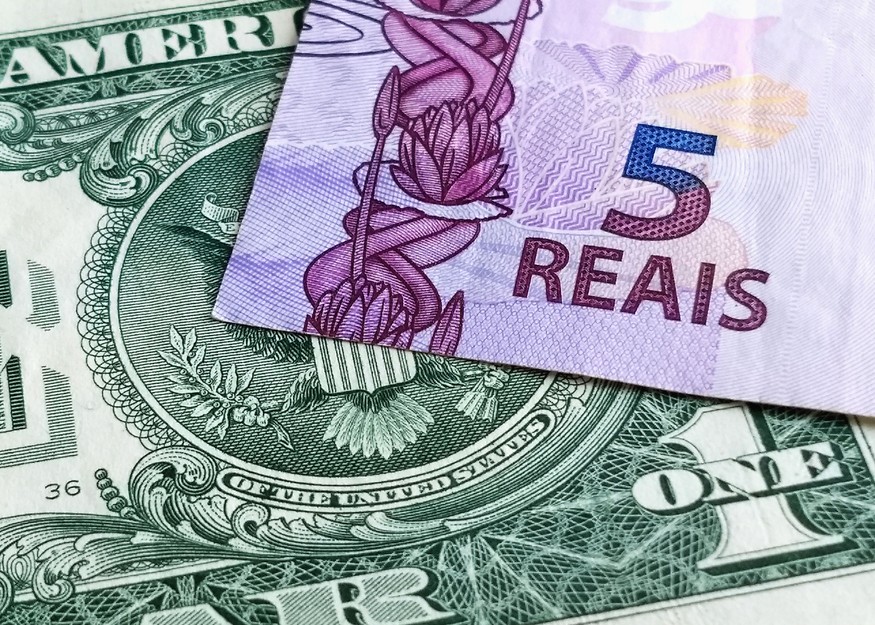
The reality is that, contrary to what has been alleged, the United States has accumulated a US$410 billion trade surplus with Brazil over the past 15 years (Brazil 2025). If implemented, the tariff measure will make most Brazilian exports to the U.S. market uneconomic. At the same time, it will have negative effects on the American private sector, as noted by AmCham and the U.S. Chamber[4]. Given the bilateral imbalance in the United States’ favor, a sharp contraction triggered by the tariff hike is likely to affect U.S. exporters more directly than Brazilian ones. Brazil is currently the United States’ 15th-largest trading partner, while the United States ranks second among Brazil’s main partners (U.S. Department of Commerce 2025)–a clear sign of asymmetrical dependence.
The measures against Brazil are a singular case in which the tariff threat is directly tied to political and sovereignty issues, such as the alleged “persecution” of Bolsonaro and Supreme Federal Court decisions related to social-media content. Possibly encouraged by figures linked to the former president–such as his son, Congressman Eduardo Bolsonaro–the episode signaled the potential for political contamination of bilateral relations, increasing diplomatic risk and generating direct repercussions in Brazil’s domestic politics, with effects that could extend through the 2026 general elections.
By imposing tariffs under the pretext of defending the political rival of Brazil’s current president, and by criticizing the judiciary of a sovereign country, Trump crossed a serious line in international relations. This is not the first time the U.S. president has politicized tariffs: measures have been applied against Mexico, linked to migration control; against Canada, under a national-security rationale; and even against Colombia, in retaliation for refusing to receive deportees from the United States (Council on Foreign Relations 2025).
Since the announcement of the measures against Brazil, the issue has proceeded in fits and starts–sometimes raising hopes that rationality will prevail, sometimes reinforcing the impression that the outlook remains uncertain and unpredictable. The negotiations and arrangements reached with other partners–Mexico, South Korea, the European Union, and the one-year truce with China–may justify a cautious, fragile optimism that there is at least some room to reverse or reduce the measures’ impact.
Returning, then, to the initial question, the best possible answer, perhaps the only one, is that a collision between Brazil and the United States has ceased to be a hypothesis and has become a painful reality. Whether we are “condemned” to remain in this state will depend on how negotiations unfold by the time I conclude this article (November 1, 2025). Any prediction is risky with an interlocutor like Donald Trump, prone to caprice and volatility. It therefore seems unlikely that a definitive agreement will be reached that resolves every outstanding issue and eliminates uncertainty by the end of his term. Perhaps the most that can be expected is a scenario of “permanent negotiation.”
November 1, 2025
Postscript
Finished on November 1, 2025, this article remains valid in its analyses and conclusions. In a sense, the two and a half months since then have confirmed and reinforced the trends identified earlier. For example, the new U.S. National Security Strategy, dated November 2025, established the so-called “Trump Corollary to the Monroe Doctrine,” defined as a reaffirmation and enforcement of that doctrine in the Western Hemisphere. Its most spectacular application was the abduction of Venezuela’s president, Nicolás Maduro, and his detention in the United States to stand trial on charges of “narcoterrorism.”
Regarding Brazil, the U.S. government later rolled back a significant portion of the additional 40% tariff. Brazilian exports to the United States fell 6.6% in 2025, to US$37.716 billion, from US$40.368 billion in 2024. The decline is attributed to the tariffs imposed by the Trump administration. Over the same period, Brazil’s imports of U.S. products grew by 11.3%, reaching US$45.246 billion, resulting in a US$7.530 billion trade deficit for Brazil. Negotiations over further tariff reductions are ongoing. A personal meeting between Lula and Trump is expected to take place at the White House in 2026.
January 12, 2026
Notes
[1]The contrast is striking with other major and middle powers in the international system—such as China, Russia, the European Union, Japan, India, Canada, Mexico, and Argentina—which have already established direct high-level contacts—generally at the presidential level—through in-person meetings, phone calls, or diplomatic exchanges.
[2]In light of the embarrassing episodes faced by the leaders of Ukraine and South Africa during official visits to the White House in the first half of 2025, the Brazilian government was slow to consider a bilateral presidential meeting.
[3]Since January 21, the U.S. diplomatic mission in Brasília has been led by Gabriel Escobar, serving as chargé d’affaires following the departure of Ambassador Elizabeth Bagley.
[4]In a statement released on July 15, 2025, Amcham Brasil and the U.S. Chamber of Commerce warned of the negative impacts of the measures on supply chains and U.S. consumers, noting that more than 6,500 companies would be directly affected.
References
Brasil. Presidência da República. Nota à imprensa. Brasília, DF, 9 jul. 2025.
Council on Foreign Relations. 2025. “Trump Levels Trade Threat at Brazil". CFR, July 10, 2025. https://www.cfr.org/article/trump-levels-trade-threat-brazil.
Hilton, Stanley. 1994. Oswaldo Aranha: uma biografia. São Paulo: Editora Objetiva.
U.S. Department of Commerce. 2025. “International Trade in Goods and Services, May 2025”. United States Census Bureau, CB 25–102, BEA 25–28. https://www.bea.gov/sites/default/files/2025-07/trad0525.pdf
Submitted: November 1st, 2025
Accepted for publication: January 13, 2026
DOI: https://doi.org/10.54827/issn2764-7897.cebri2025.16.02.01.17-31.en
* Translated by Victoria Corrêa do Lago with the support of digital machine translation tools: Google Translate (initial draft), Grammarly (grammatical and syntactic revision), and ChatGPT (selective phrasing refinements). Reviewed by the author.
Copyright © 2026 CEBRI-Journal. This is an Open Access article distributed under the terms of the Creative Commons Attribution License, which permits unrestricted use, distribution, and reproduction in any medium, provided the original article is properly cited.
