
-

-

-
 PT | EN
PT | EN 
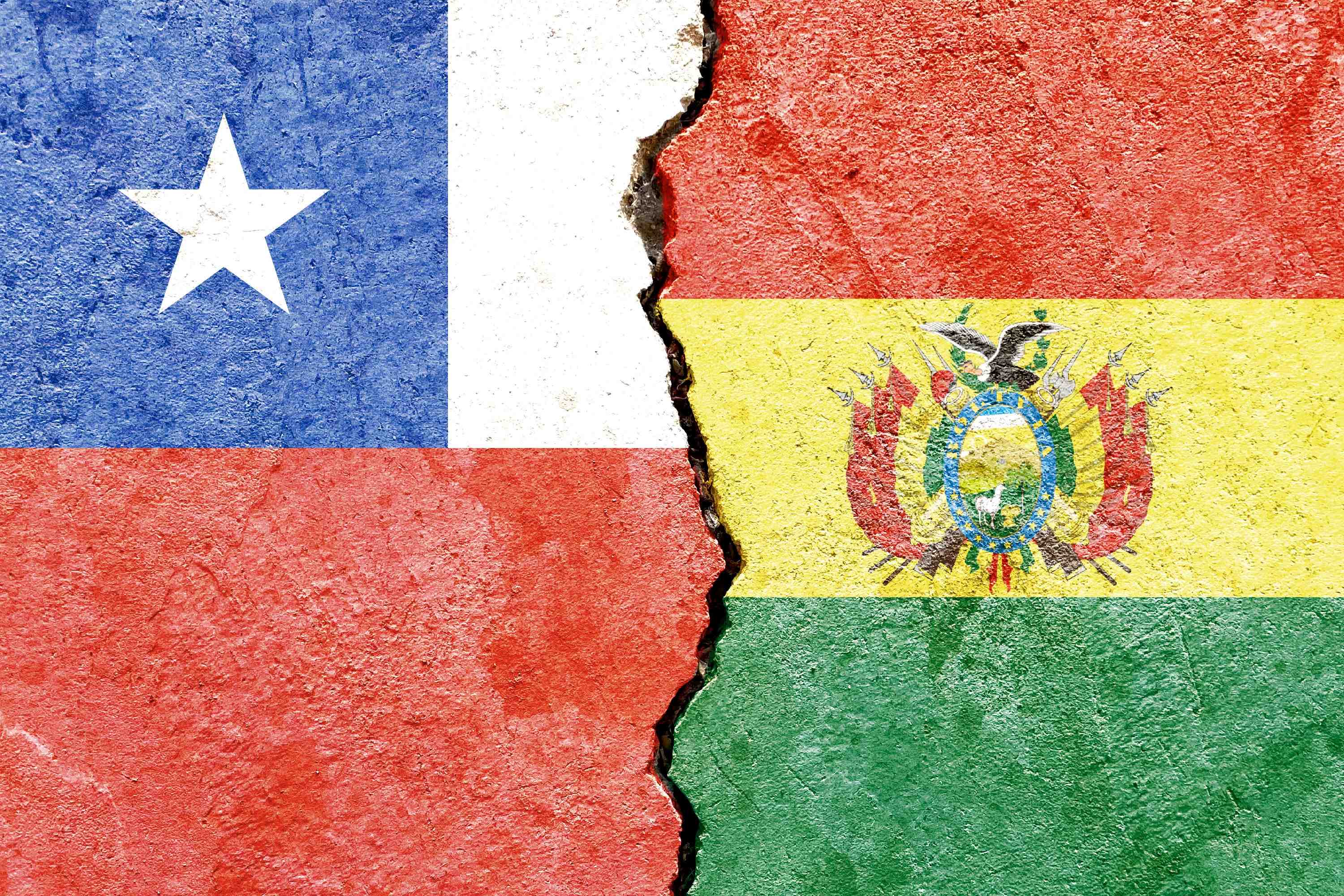
In the last decade, Chile and Bolivia have faced each other twice at the International Court of Justice (ICJ), the principal judicial organ of the United Nations (UN). The judicialization of disputes between the two countries is a symptom of a difficult diplomatic relationship stemming from unresolved issues arising from the War of the Pacific (1879-1884), one of the largest conflicts in South America.
Disputes over water resources primarily affect Bolivia, which, after finding itself landlocked in post-war negotiations with Chilean authorities, listed access to the sea as a priority of its foreign policy. Then, in 2013, Bolivia submitted its first case against Chile to the ICJ. The case was judged in 2018, with the final decision in favor of Chile. The dispute concerned Chile's alleged obligation to negotiate sovereign access to the Pacific Ocean for Bolivia. Simultaneously, Chile presented a second dispute between the parties in 2016, claiming the status of the Silala River as an international waterway. The result, judged in 2022, was again favorable to Chile. Since then, the countries have attempted to deepen their relations, but past conflicts continue to affect present-day diplomacy.
THE ORIGINS OF BOLIVIAN DEMAND
Bolivia's quest for sovereign access to the sea dates back to the immediate aftermath of the War of the Pacific (1879-1884), which redrew its territorial borders. In short, Chile's declaration of war against Peru and Bolivia in April 1879 marked the beginning of the War of the Pacific, in which a Bolivian-Peruvian alliance disputed Chile's hegemony over the Atacama Desert, rich in mineral resources (Costa 2017). During the conflict, Chilean troops occupied the Antofagasta territory, which corresponded to the Bolivian maritime coast and provided access to the Pacific Ocean.
The end of hostilities occurred in 1884, after Chile imposed itself militarily; however, peace negotiations between Chile and Bolivia did not conclude until 1904 with the signing of the Treaty of Peace and Friendship, which laid the foundations for the relationship between the South American countries in the post-war period (Clemente & Terra 2021). The treaty formalized the cession of Bolivian coastal territories to Chile, leaving Bolivia with one of its greatest scars–the lack of sovereign access to the sea.
The political and social impact of Bolivia's territorial enclosure reverberates to this day. The importance of access to the sea for Bolivian society was symbolically materialized in the national commemoration of Sea Day, which annually recalls, on March 23, the loss of Bolivia's coastline (Costa 2017). Therefore, since the years following the Treaty of Peace and Friendship, Bolivian authorities have been pressing for bilateral negotiations with Chile for Bolivia's sovereign access to the Pacific Ocean. In 1978, Bolivia broke off diplomatic relations with Chile due to a lack of practical progress in negotiations and maintains consular-level relations with the country to this day. Alternatives to negotiating with Chile also fueled Bolivia's involvement in other disputes, such as the Chaco War (1932-1935) against Paraguay (Bandeira 1998).
The rise of Evo Morales (2006-2019) to power, president of Bolivia for three consecutive terms, strengthened the issue on the country's political agenda. As early as 2006, the Bolivian government, in dialogue with the Chilean government, established the thirteen-point agenda, intended to become the basis for bilateral relations between the two countries. The maritime issue is one of the thirteen challenges proposed by the parties, who would seek joint solutions to overcome it. However, as early as 2011, the Bolivian government signaled its intent to advance the issue beyond bilateral dialogue, creating the Directorate of Maritime Claims (DIREMAR) to coordinate the preparation of maritime claims for presentation before international tribunals. DIREMAR's work led to the judicialization of demands for negotiating the maritime issue with Chile at the ICJ in April 2013.
THE OBLIGATION TO NEGOTIATE SOVEREIGN ACCESS TO THE PACIFIC OCEAN
The Bolivian claim before the ICJ did not directly involve overriding the Treaty of Peace and Friendship, nor did it claim territories along its former maritime coast. For Bolivia, the object of the dispute was, in fact, the non-compliance with a Chilean obligation–the obligation to negotiate Bolivia's full and sovereign access to the Pacific Ocean (International Court of Justice 2018b). To this end, a commission of historians, jurists, and experts appointed by the Bolivian government compiled an extensive dossier with diplomatic exchanges between the parties and statements from Chilean authorities, which, along with letters from the UN and the Organization of American States (OAS), showed that Chile had committed to negotiating, according to the Bolivian argument.
Chile, in turn, sought to show that the Bolivian argument was legally untenable, as there was no formal agreement between the parties that created an obligation to negotiate the maritime issue. The Chilean defense sought to reinforce the point that diplomatic dialogues do not create an obligation to negotiate, and that international law does not require States to negotiate their aspirations with their neighbors (Ceppi 2017).
The ICJ ruling, issued in 2018, established that Chile did not assume a legal obligation to negotiate Bolivia's sovereign access to the Pacific Ocean. In short, the ICJ held that none of the instruments presented by Bolivia in its complaint created a binding legal obligation. The ICJ, however, stressed the importance of maintaining dialogue between the parties to resolve the issue. The result was not well received by Bolivian authorities, who described it as "unfair," but insisted they would continue pursuing access to the Pacific and called on Chile to continue the dialogue (Conjuntura Latitude Sul 2018).
THE ORIGINS OF CHILEAN DEMAND
The Silala River has been the subject of a dispute between Chile and Bolivia since the 1990s. The river originates in Bolivian territory and, following its natural topography, crosses the border into Chile. However, Bolivian authorities have maintained since 1999 that sovereignty over the use of its waters belongs entirely to Bolivia, rejecting the idea that it is a transboundary water resource. According to the Bolivian government, the waters of the Silala belong entirely to Bolivia, as they were artificially diverted to Chile (Bolivian Foreign Ministry 2016).
The Bolivian accusation dates back to 1908, when the company Ferrocarril de Antofagasta a Bolivia (FCBA), which had held the concession for the use of the Silala River waters in Chile since 1906, altered the flow of the Silala River through a canalization project made possible by a Bolivian concession (Bahia 2021). The company aimed to increase water supply to operate the region's railway network. In 1997, the Bolivian government revoked the concession, alleging that the waters were no longer being used for their original purpose, for those designated for the railway system were also being used for human consumption (Bahia 2021). Since then, Bolivia has taken unilateral measures regarding the Silala River, classifying it as a national water resource (Bahia 2021).
With the escalation of the dispute over access to the Pacific in 2013, the Silala River issue also worsened. In March 2016, Bolivian President Evo Morales announced that he would consider filing a claim with the ICJ against Chile for the unauthorized and uncompensated use of the Silala River's waters. According to the Bolivian accusation, the waters were artificially diverted to Chile. In response, then-President of Chile, Michelle Bachelet, announced that the Chilean government would submit its own claim to the ICJ, asserting the Silala River's status as an international river.
THE STATUS AND USE OF THE WATERS OF THE SILALA RIVER
In June 2016, Chile submitted its claims over the Silala River to the ICJ. In short, the dispute concerned the nature of the Silala as an international waterway, subject to customary international law and the principle of equitable and reasonable use by both countries (International Court of Justice 2022).
The dispute over the nature and use of the Silala River is particularly complex because it is shaped by historical and scientific issues (Bahia 2021). Historically, Chile argued that both States recognized the Silala River as an international waterway as early as the 1904 Treaty of Peace and Friendship, which established the basis for the relationship between the parties after the War of the Pacific, as mentioned earlier. Scientifically, Chile maintained that the Silala's headwaters flowed into its territory before the artificial canalization and, therefore, the artificial canals do not affect the transboundary course of the Silala (Bahia 2021).
Bolivia, from a scientific standpoint, considered the Silala River to be a series of springs rather than a river (Bahia 2021). The country also argued that the artificial channels had substantially altered the flow of the Silala, thereby generating the volume of water present in Chilean territory (International Court of Justice 2018a). During the proceedings, Bolivian authorities also claimed that Chile should financially compensate Bolivia for the use of water originating from artificially created flows in the Silala.
The ICJ's decision came in November 2022. At trial, the parties had already reached an agreement on most of the claims. The ICJ then found that the entire system (natural and artificial) of the Silala River is an international waterway governed by customary international law, to be used by both parties in accordance with the principle of equitable and reasonable use, favoring Chile's initial position. This time, the main Bolivian and Chilean authorities were satisfied with the outcome of the process.
Bibliographic References
Álvarez, Rosario. 2016. “Canciller explains the five points that motivated the demand from Chile to Bolivia for the Silala River”. La Tercera, June 6, 2016. https://www.latercera.com/noticia/canciller-explica-los-cinco-puntos-que-motivaron-la-demanda-de-chile-a-bolivia-por-el-rio-silala/ .
Bahia, Amael Notini Moreira. 2021. “The definition of international watercourses and the Silala case”. Anuario Mexicano De Derecho Internacional, 1(21): 233-267. https://doi.org/10.22201/iij.24487872e.2021.21.15593 .
Bandeira, LAM 1998. “The Chaco War”. Brazilian Journal of International Politics, 41(1): 162–197. https://doi.org/10.1590/S0034-73291998000100008
Bolivian Cancillery. 2016. President Evo Morales inspected this martes of Silala's manantiales... March 29, 2016. https://www.cancilleria.gob.bo/webmre/node/1398 .
Ceppi, Natalia. 2020. “Bolivia and Chile before the ICJ: final point for the judicialization of maritime claims”. Notebooks on Argentine Foreign Policy (130): 63–80. https://doi.org/10.35305/cc.vi130.7 .
Clemente, Stephanie Braun & Ana Carolina Dias Terra. 2021. “Is there an 'elephant in the room'? An analysis of contemporary relations between Bolivia and Chile in geopolitical terms”. Hoplos , 5(9): 32-47. https://periodicos.uff.br/hoplos/article/view/51625 .
Latitude Sul. 2018. "International Court of Justice judges historic dispute between Bolivia and Chile over access to the sea". Conjuntura Latitude Sul 2(10): 5-6. http://neaape.com.br/wp-content/uploads/2022/08/Conjuntura-Latitude-Sul-n.10-Outubro-2018-v2.pdf
Costa, Murilo Gomes da. 2017. “Bolivia and Chile: Geopolitical reflections on the maritime dispute”. OPSA Bulletin (1): 08-11. http://opsa.com.br/wp-content/uploads/2017/05/Boletim_OPSA_2017_n1.pdf .
DIREMAR. Chronology of the Bolivian demand. s/a. http://www.diremar.gob.bo/diremar/index.php/cronologia-de-la-demanda-boliviana/ .
Dunkelberg, AG 2019. “Obligation to Negotiate Access to the Pacific Ocean (Bolivia v. Chile).” American Journal of International Law, 113(2): 347-353. https://doi.org/10.1017/ajil.2019.9 .
International Court of Justice. 2018a. "Dispute over the Status and Use of the Waters of the Silala (Chile v. Bolivia)". Counter-memorial of the Plurinational State of Bolivia 1. https://www.icj-cij.org/sites/default/files/case-related/162/162-20180903-WRI-01-00-EN.pdf.
International Court of Justice. 2018b. “Obligation to negotiate access to the Pacific Ocean (Bolivia v. Chile)”. Summary of the Judgment 5, October 1, 2018. https://www.icj-cij.org/sites/default/files/case-related/153/153-20181001-SUM-01-00-EN.pdf .
International Court of Justice. 2022. "Dispute over the Status and Use of the Waters of the Silala (Chile v. Bolivia)". Summary of the Judgment 5, December 1, 2022. https://www.icj-cij.org/sites/default/files/case-related/162/162-20221201-SUM-01-00-EN.pdf .
Received: July 13, 2024
Accepted for publication: August 29, 2024
Translation published: July 6, 2026
* Translated by Theo Pereira with the support of digital machine translation tools: Google Translate (initial draft), Grammarly (grammatical and syntactic revision), and ChatGPT (selective phrasing refinements). Reviewed by the author.
Copyright © 2026 CEBRI-Revista. This is an open access article distributed under the terms of the Creative Commons Attribution License, which permits unrestricted use, distribution, and reproduction in any medium, provided the original article is properly cited.
