
-

-

-
 PT | EN
PT | EN 
This article analyzes the reconfiguration of US hemispheric policy in 2025-2026 and its implications for Brazil. It argues that the second Trump administration securitized trade and supply chains through tariffs as instruments of political coercion, reinforcing Brazil's elite consensus around strategic autonomy. The article explores concrete avenues for cooperation in security and critical minerals, concluding that bilateral relations are likely to be characterized by managed volatility rather than alignment or rupture.
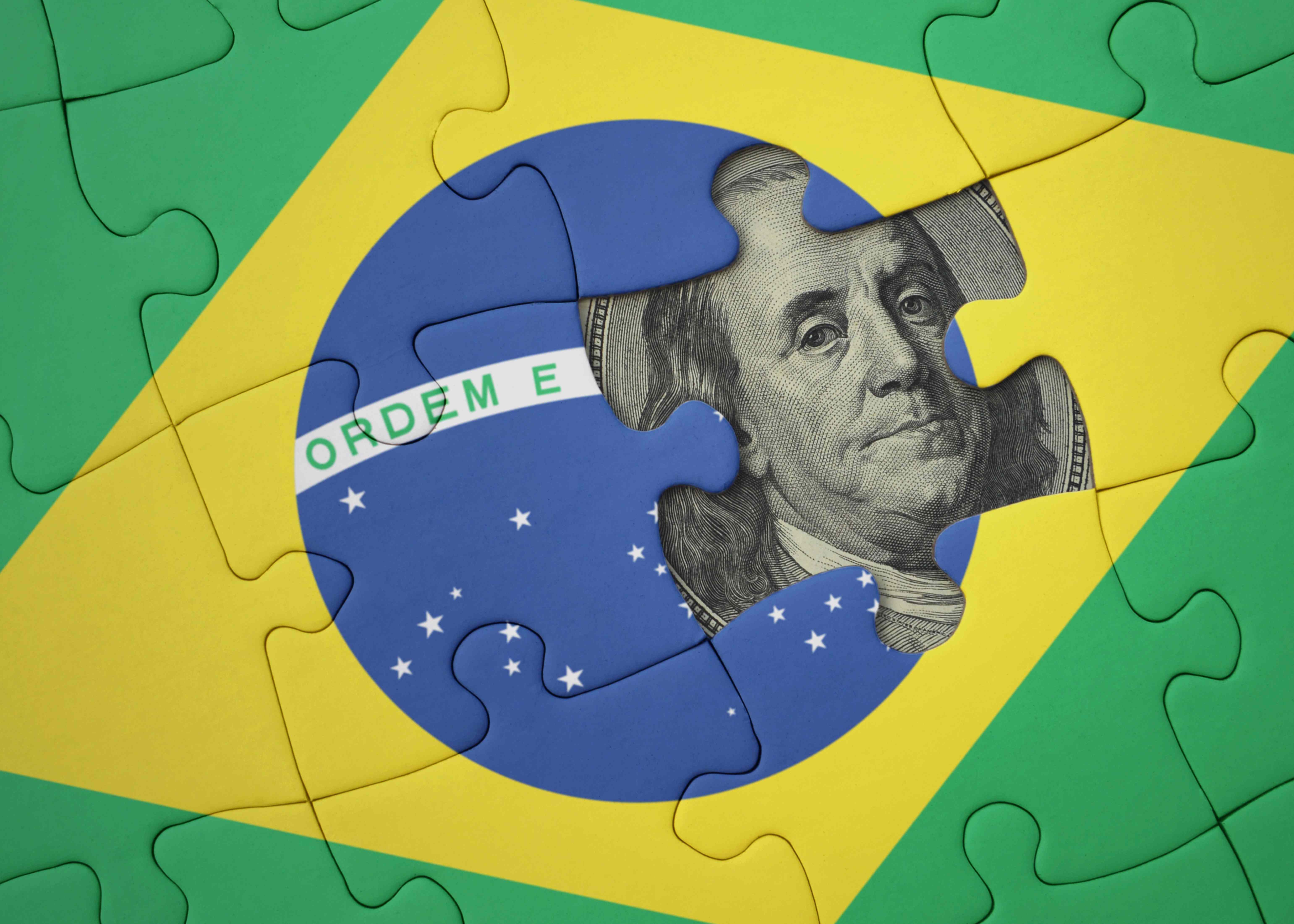
Since 2025, the reconfiguration of United States hemispheric policy has reshaped relations with Brazil by turning economic instruments into tools of political leverage. The second Trump administration has increasingly framed the region through a homeland security and supply chain resilience lens, using tariffs and related measures less as residual trade remedies and more as coercive statecraft. The 2025 tariff episode with Brazil crystallized this shift. A dispute that might once have remained within trade channels became a sovereignty confrontation when Washington tied economic penalties to Brazil’s domestic political and judicial trajectory, prompting rapid Brazilian counter-mobilization and consolidating elite consensus around strategic autonomy.
Despite recurrent friction, the relationship is settling into selective cooperation where both governments can claim tangible gains while limiting domestic political exposure. The most resilient channels are those with operational deliverables, notably efforts against transnational organized crime and targeted engagement on critical minerals. Rare earths offer the most credible constructive agenda because they align Brazil’s resource potential with United States priorities to diversify supply chains beyond Chinese processing and reduce strategic vulnerability. Even so, cooperation is likely to remain narrow, bounded by Brazil’s sensitivity to perceived interference, the accelerating securitization of digital governance and platform regulation, and China’s non-substitutable economic centrality as Brazil’s largest trading partner. The most plausible 2026 outcome is managed volatility rather than alignment or rupture, with thin cooperation as the norm and episodic crisis management as the stabilizer.
The United States posture is anchored in a sharper fusion of domestic priorities with external instruments. The Trump administration’s 2025 National Security Strategy places the region at the center of United States objectives, defining hemispheric stability in terms of migration control, countering cartels and transnational criminal organizations, preventing hostile ownership of strategic assets, and protecting critical supply chains (White House 2025a). In practice, this framing increases the salience of trade and financial levers as instruments of signaling and compliance, and privileges high visibility moves over slower institutional bargaining, tightening the coupling between domestic political incentives and foreign policy action.
Brazil is the key test case for evaluating the reach and limits of the United States approach. It is simultaneously a major regional actor and a middle power with established doctrines of autonomy and multi-alignment. Its economic scale and diplomatic weight make durable punitive isolation difficult to sustain, while its institutional memory of external interference raises the domestic political costs of visible conditionality. The bilateral relationship is therefore better understood as bargaining under asymmetry and constraint than as a strategic partnership in the classical sense.
This article makes three interlocking arguments about the emerging pattern of United States-Brazil relations. First, the United States is normalizing coercive hemispheric statecraft through a broadened toolkit that includes the securitization of tariffs, expanded extraterritorial economic pressure, and the threat or use of military assets. Second, Brazil’s response is less opposition to cooperation than resistance to coercion framed as interference in domestic institutions. Third, selective cooperation will persist where interests overlap and deliverables are measurable, especially in security cooperation and critical minerals, but the relationship will remain structurally volatile given China’s economic centrality and politicized disputes over digital governance.
HEMISPHERIC POLICY RECENTERED ON DOMESTIC OBJECTIVES
The 2025 National Security Strategy and the 2026 National Defense Strategy recenter the Western Hemisphere as an extension of homeland governance and treat regional stability fundamentally linked to domestic security. The former prioritizes preventing mass migration, securing cooperation against cartels and transnational criminal organizations, protecting critical supply chains, and limiting hostile foreign incursions or ownership of strategic assets (White House 2025a). The latter reinforces this orientation by stressing defense of United States interests across the hemisphere, greater burden sharing for regional security, and accelerated investment in the defense industrial base (US Department of War 2026). Read together, they imply that hemispheric policy will be judged against domestic measures of success, especially border pressure, narcotics flows, and visible enforcement outcomes.
This posture produces two systemic effects that shape both what Washington prioritizes and how it applies pressure across the hemisphere. The hemisphere becomes a preferred theater for assertive action because it can be justified as direct protection of the US domestic order. The second is instrument selection. Economic tools once treated as specialized instruments of trade or sanctions policy are reclassified as general purpose levers of coercion. In practice, this collapses the boundary between economic diplomacy and political conditionality, increasing uncertainty for regional governments and for private sector actors that depend on stable and predictable rules.
It also creates a premium on demonstration, privileging highly visible moves as political signals of control and resolve. Decisive action in the hemisphere becomes proof that coercion can produce outcomes, even when the broader external effects are ambiguous or destabilizing. How partners interpret the signal matters less than sustaining a domestic narrative of resolve and control. The strategic risk is path dependence. Precedent hardens into expectation, and measures initially presented as exceptional become normalized elements of routine statecraft.
FROM TRADE DISPUTE TO SOVEREIGNTY DISPUTE IN US-BRAZIL RELATIONS
The 2025 tariff crisis illustrates the political limits of coercion when directed at a large, autonomy-oriented partner. The United States announced 50% tariffs on Brazilian goods and explicitly linked them to Brazil’s internal political and judicial dynamics, including the proceedings involving former President Jair Bolsonaro (Bade & Pearson 2025; United States 2025). By formalizing the measure through Executive Order 14323, Washington elevated the dispute to a national emergency frame, asserting that Brazilian policies and actions constituted an “unusual and extraordinary threat” to national security, foreign policy, and the economy (United States 2025).
Washington's approach produced two immediate effects in Brazil. First, tying tariff penalties to domestic judicial processes recast the episode as interference rather than trade bargaining, activating sovereignty reflexes across the political spectrum. Second, the emergency rationale reinforced this interpretation for Brazilian elites. Invoking emergency authority signaled political coercion rather than ordinary protectionism, widening the dispute from commerce into institutional legitimacy.
Brazilian assessments were further sharpened by parallel pressure tactics against other partners, including Canada and Mexico. In early 2025, the administration threatened and began moving toward broad tariffs on imports from both countries, explicitly tying the measures to border security, fentanyl flows, and migration under an emergency logic rather than a conventional trade remedy rationale (White House 2025b). In Mexico’s case, tariff threats were used to compel visible enforcement measures, including large scale deployments of troops to the northern border, underscoring the premium placed on demonstrable compliance (Wagner 2025).
A similar coercive template was applied to Colombia. In January 2025, Washington threatened steep tariffs and visa restrictions after Bogotá initially refused United States deportation flights, and the standoff was rapidly reversed after escalation (Montoya Galvez 2025). For Brazilian decision makers, these episodes reinforced a shared inference that economic instruments were being operationalized as cross domain tools for enforcement and signaling, not merely as trade measures. That perception raised the reputational costs of yielding and strengthened the perceived need for coordinated domestic and diplomatic counter mobilization.
Brazil’s official response was cautious in method but firm in principle. Brasília emphasized negotiation as the primary channel, while signaling retaliation options through the Economic Reciprocity Law framework (Máximo 2025; Brazil 2025a). The Reciprocity Law, promoted as a strategic response to unilateral restrictions, institutionalized Brazil’s ability to impose reciprocal measures when its sovereign choices are constrained by external economic pressure (Brazil 2025a). The combination of principled rhetoric and legal preparation served two functions. It strengthened Brazil’s bargaining position by credibly signaling that escalation would impose costs on both sides, and it reduced the government’s domestic reputational costs by defending autonomy.
Structural trade facts also undermined Washington's narrative of corrective tariffs. United States government data show a persistent goods surplus with Brazil, reported at US$ 6.8 billion in 2024, alongside substantial services trade (USTR 2024). Brazil’s Ministry of Foreign Affairs emphasized that, when goods and services are combined, the United States surplus was even larger, positioning the tariff action as politically motivated rather than economically corrective (Brazil 2025b). These figures do not eliminate trade frictions, but they weaken the legitimacy of punitive measures framed as deficit correction.
By late 2025, the White House issued an order modifying the scope of tariffs on Brazil, suggesting that the coercive approach did not produce straightforward compliance and required adjustment to limit collateral costs (White House 2025c). The episode thus ended in de-escalation without settlement. Its principal legacy is reputational and institutional. It deepened Brazilian skepticism of conditionality and strengthened the domestic coalition in favor of strategic autonomy.
COERCIVE STATECRAFT BEYOND BRAZIL AND THE PROBLEM OF PRECEDENT
The Brazil case unfolded alongside a broader pattern of increasingly coercive hemispheric statecraft. A key illustration is the January 2026 United States-led operation that resulted in the capture and detention of Venezuela’s Nicolás Maduro on federal charges, an event that has triggered diplomatic, legal, and normative debate across the hemisphere (Farella 2026; Vigil 2026). Regardless of one’s judgments of legality or desirability, the incident functions as a demonstration signal that Washington is prepared to blur boundaries between law enforcement and coercive intervention when it defines the target as a transnational security threat.
This matters for Brazil because it increases the perceived risk of escalation when disputes are politicized. It also amplifies the sovereignty sensitivity that shapes Brazilian elite consensus. Brazil does not need to anticipate direct coercion to revise its risk calculus. It needs only to observe that exceptional measures are being normalized in the hemisphere. In that environment, even cooperative domains can become contested if they are perceived as latent pathways to leverage.
Another illustration is the expansion of extraterritorial economic coercion. In January 2026, the White House announced a mechanism threatening tariffs on imports from countries that provide oil to Cuba, formalizing a method for applying trade penalties through third-party supply relationships (White House 2026). Such measures widen uncertainty for regional supply chains and complicate investment decisions. They also reinforce perceptions of a more hierarchical hemispheric order in which sovereignty becomes negotiable when United States domestic objectives are at stake.
For middle powers, this dynamic is not only normative but strategic. If interventionist and extraterritorial logics become routine in the United States’ neighborhood, then the threshold for analogous behavior may fall elsewhere. Permissive precedent can travel, providing a ready made repertoire for other powers such as China or Russia to justify cross border coercion through protective rationales, law enforcement claims, or extraterritorial economic penalties. The consequence is an erosion of reciprocity based restraint. As norms weaken, smaller and mid-sized States operate in a less predictable environment in which sovereignty becomes contingent and bargaining power, rather than rules, does more of the work of securing autonomy.
DIPLOMATIC THINNESS AND FUNCTIONAL RESILIENCE
In parallel with political volatility, the bilateral relationship has been shaped by diplomatic thinness, meaning fewer high level political touchpoints and a narrower capacity for symbolic reassurance during disputes. As of early 2026, the US mission in Brasília has continued under a chargé d’affaires arrangement (U.S. Mission in Brazil 2025). The absence of a Senate-confirmed ambassador does not preclude effective diplomacy, but it weakens signaling, reduces convening power, and can slow crisis defusion when escalation pressures rise.
In this environment, working-level resilience becomes central. Functional agencies, trade officials, and private sector interlocutors sustain cooperation through technical routines and ongoing problem solving even when political rhetoric intensifies. This helps explain how the relationship avoided rupture in 2025. Negotiation channels stayed open, while bureaucratic and commercial actors emphasized the shared costs of escalation and the narrow but real benefits of selective cooperation (Sá Pessoa 2025). The result is a relationship that remains operationally functional even as it grows politically brittle.
SECURITY COOPERATION AS A STABILIZER AND CONTESTED SYMBOL
Security cooperation remains the most plausible near term stabilizer because it can be defended as mutual risk reduction rather than ideological alignment, even as it is politically legible as a symbol of alignment. The United States national security framing elevates cooperation against cartels and transnational criminal organizations as a hemispheric priority (White House 2025a). Brazil has its own incentives to deepen cooperation on transnational organized crime, including port security, customs enforcement, and financial intelligence (Muggah 2025a; Muggah 2025b; Muggah 2025c).
However, the same conditions that make security coordination necessary also make it politically sensitive. Under coercive signaling, even routine collaboration can be read as conditionality or deference. Brazil’s strategic autonomy doctrine therefore favors thin cooperation that is operational and bounded, rather than thick cooperation that implies political alignment. Thin cooperation can include intelligence sharing on illicit finance, joint technical initiatives to harden ports, and coordinated enforcement against trafficking networks. Thick cooperation, by contrast, would entail shared political framing, durable institutional integration, or explicit geopolitical alignment, all of which are less likely.
Brazil’s emphasis on autonomy therefore does not signal refusal. It signals a preference for modular cooperation that can be insulated from broader political disputes. For Washington, this may feel less satisfying than alliance-style integration. For Brasília, it is the only cooperation geometry compatible with domestic sovereignty norms.
CRITICAL MINERALS AS THE MOST CREDIBLE POSITIVE AGENDA
If any domain can generate a positive, politically resilient agenda, it is critical minerals, particularly rare-earths. The United States has strong incentives to diversify supply chains away from Chinese dominance in refining and processing, a vulnerability that has become more salient amid global industrial policy competition (Northey & Bikales 2026; Martina et al 2026). Brazil holds relevant reserves and could position itself as both a supplier and a potential processing node, provided it secures investment and technology transfer (Pope & Smith 2023; Muggah 2026).
A concrete signal of this opportunity is the US Development Finance Corporation’s (DFC) approval of financing for Serra Verde’s rare-earth project in Goiás, explicitly framed as part of diversification efforts (Lovisi 2026; Magnotta 2025). The DFC’s project documentation describes the mine and associated facilities and clarifies the investment rationale as supporting supply chain resilience (DFC 2025). For Washington, this is a strategic bet on non-Chinese supply. For Brazil, it is a pathway to attract capital and potentially upgrade industrial capabilities.
Yet the political economy is complex. Brazil will seek value capture through domestic processing and downstream integration rather than serving only as a raw-materials supplier. A minerals partnership that reproduces an extractive pattern without upgrading is unlikely to be politically stable. Moreover, Brazil will avoid explicit anti-China alignment even when diversification serves US strategic aims. Minerals cooperation will therefore be framed as investment, industrial policy, and resilience rather than bloc politics.
If managed carefully, critical minerals can provide what the broader relationship often lacks, namely a shared project with identifiable constituencies, measurable deliverables, and economic upside. By creating durable commercial and subnational stakeholders, such projects can generate political ballast that persists even when bilateral rhetoric deteriorates. It also offers a reputational counterweight to tariff coercion by shifting the bilateral narrative from punishment toward joint capacity building.
DIGITAL GOVERNANCE AS A RECURRENT FRICTION POINT
Digital governance is emerging as a second structural source of friction because it sits at the intersection of market regulation, political legitimacy, and national security narratives. Brazil has advanced proposals to regulate digital markets and large platforms, with legislation framed by some actors as analogous to EU style ex ante regulation (US Chamber of Commerce 2025). Domestic debate over platform rules is tightly bound to concerns about misinformation, democratic resilience, and information integrity (Muggah & Margolis 2023). In the United States, by contrast, platform regulation is entangled with disputes over free expression, market access, and geopolitical competition.
These divergent frames create fertile conditions for securitization. United States industry and policy actors may interpret Brazilian rules as discriminatory or as heightened political risk for United States firms, while Brazilian actors interpret United States pressure as an attempt to constrain sovereign regulatory authority. Once these conflicts spill into trade policy, they become harder to resolve because the dispute shifts from technical compliance to questions of values, institutional legitimacy, and control over the information space.
Brazil’s Supreme Court has also moved toward frameworks that increase platform liability for illegal content, reinforcing the trajectory toward tighter governance of digital ecosystems (Savarese & Hughes 2025). Although grounded in domestic legal processes, such decisions can be read externally as de facto changes in market access and liability exposure with cross border implications. Under conditions of heightened bilateral suspicion, digital policy can therefore function as a proxy arena for wider geopolitical contestation, amplifying volatility even in periods of cooperation elsewhere.
CHINA AS A STRUCTURAL CONSTRAINT AND BARGAINING BOUNDARY
China functions as the central structural constraint in United States-Brazil relations and sets a clear bargaining boundary for Brasília. As Brazil’s largest trading partner, Beijing is pivotal to export revenues and increasingly embedded in infrastructure and industrial supply chains. Brazilian diplomacy has continued to engage China at high levels, reflecting how hard this relationship is to replace for growth and balance of payments stability (Sá Pessoa 2025b). This reality limits Washington’s ability to impose either or alignment demands and constrains Brasília’s willingness to adopt rhetoric that could jeopardize economic stability. It also reinforces incremental de-dollarization efforts, visible in reserve diversification and payments infrastructure (Banco Central do Brasil 2025).
At the same time, Brazil has faced pressures from shifting global trade flows, including the influx of cheaper Chinese goods redirected by trade tensions. This has intensified protectionist impulses and industrial policy debates in Latin America, including Brazil (Ho-Him, Debre, Batschke & Sánchez 2026). Brazil’s relationship with China is structural, but not unproblematic, and hedging now includes financial as well as trade instruments (Máximo 2025). Brazil will continue to hedge, seeking diversification where feasible, while maintaining the trade fundamentals that anchor its macroeconomic position.
For United States policy, the implication is straightforward. Coercion aimed at forcing alignment is likely to be counterproductive, accelerating Brazilian hedging and hardening autonomy preferences across economic, regulatory, and monetary domains. Positive agendas that enable diversification without demanding binary commitments, including critical minerals investment and targeted supply chain partnerships, are more likely to succeed because they build constituencies for cooperation while leaving Brasília room to manage its China exposure and its preference for greater monetary autonomy.
PROSPECTIVE TRAJECTORIES IN 2026
The most plausible 2026 outcome is neither alignment nor estrangement but managed volatility, an operating condition defined by three recurring features. First, cooperation is compartmentalized. Deliverable oriented domains such as critical minerals and selective security cooperation can expand, while high salience arenas such as tariffs and domestic judicial and institutional disputes remain contested. The late 2025 adjustment of tariff scope points to a pragmatic recognition of escalation costs and the limits of sustained pressure (White House 2025b).
Second, interference sensitivity remains decisive. Any United States signaling that appears to condition trade policy on Brazil’s judicial processes will predictably trigger nationalist pushback and narrow the space for compromise. The 2025 tariff crisis shows how quickly domestic legitimacy concerns can become the dominant frame, displacing narrower bargaining over commercial terms (United States 2025; Sá Pessoa 2025a).
Third, China functions as a constraint rather than a discrete agenda item. United States pressure is filtered through Brazil’s structural reliance on Chinese demand, while Brasilia's diversification efforts are filtered through Washington's concerns about Beijing dominance across critical supply chains (Sá Pessoa 2025b). The effect is to bound the feasible bargaining space for both capitals even when their short-term interests overlap.
In such an environment, crisis management mechanisms matter as much as grand strategy. Direct leader-to-leader communication can prevent escalation, but the deeper stabilizer is institutional. Dispute resolution channels, modular cooperation, and disciplined signaling that avoids converting each episode into a sovereignty test will determine whether volatility remains manageable.
CONCLUSION
The return of a “big stick” posture in the Americas is best understood as a shift in the logic and instruments of hemispheric policy. The Western Hemisphere is increasingly framed as an extension of United States homeland governance, and economic levers are deployed as general instruments of coercive diplomacy. Brazil is the key test case because it combines strategic importance with a strong autonomy doctrine and high sensitivity to perceived interference. The 2025 tariff crisis demonstrates that coercion tied to domestic political and judicial dynamics is likely to backfire, reinforcing resistance and narrowing pathways to durable cooperation.
At the same time, selective cooperation is feasible and likely. Security coordination can persist in thin forms that deliver operational value without implying alignment. Critical minerals offer the most credible positive agenda because they align Brazil’s resource base with United States supply chain diversification imperatives, as illustrated by the DFC-supported Serra Verde project. Yet the relationship remains structurally constrained by China’s economic centrality and by politicized disputes over digital governance.
The most realistic expectation for 2026 is managed volatility. Both capitals have incentives to avoid rupture and to secure limited wins for domestic audiences, especially in election years. Absent a shift away from coercive signaling toward mutually beneficial bargaining, volatility will remain a structural condition of United States-Brazil relations in the new hemispheric environment. Washington is expanding a coercive repertoire, while Brazil is seeking to preserve autonomy without triggering rupture.
References
Bade, Gavin & Samantha Pearson. 2025. “Trump to Impose 50% Brazil Tariff, Citing Bolsonaro Trial”. Wall Street Journal, July 9, 2025. https://www.wsj.com/world/americas/trump-threatens-50-brazil-tariff-citing-bolsonaro-trial-93a95e7b.
Banco Central do Brasil. 2025. International Reserves Management Report, Volume 17, July, https://www.bcb.gov.br/content/publications/irmr/international_reserves_management_report_2025.pdf.
Brazil. 2025b. “Trade Measures Adopted by the United States Government on April 2, 2025.” Ministry of Foreign Affairs, April 2, https://www.gov.br/mre/en/contact-us/press-area/press-releases/trade-measures-adopted-by-the-united-states-government-on-april-2-2025-joint-mre-mdic-press-release.
Brazil. 2025a. “Brazil Enacts Economic Reciprocity Law.” Planalto, April 16, https://www.gov.br/planalto/en/latest-news/2025/04/brazil-enacts-economic-reciprocity-law.
Department of War. 2026. National Defense Strategy. https://media.defense.gov/2026/Jan/23/2003864773/-1/-1/0/2026-NATIONAL-DEFENSE-STRATEGY.PDF
Farella, Sergio. 2026. “Argentina Requests Extradition of Maduro from the US on Crimes against Humanity Charges”. Associated Press News, February 4, 2026. https://apnews.com/article/argentina-maduro-milei-trump-extradition-universal-jurisdiction-f1c51e062ebe8a4973136120d32960c6.
Ho-Him, Chan, Isabel Debre, Nayara Batschke & Fabiola Sánchez. 2026. “Flooded by Cheap Chinese Goods, Latin America Is Fighting Back to Protect Its Industries”. Associated Press News, February 2, 2026. https://apnews.com/article/e78ccd51a7f66099d84fda885d2907a3.
International Development Finance Corporation. 2025. “Initial Project Summary: Serra Verde Rare-Earths Project”. https://www.dfc.gov/sites/default/files/esia/2025/serraverde/Project/02_Initial%20Project%20Summary_Serra%20Verde_508.pdf.
Kolios, Lambrini. 2025. “Why Brazil Should Rethink Its Digital Markets Bill”. U.S. Chamber of Commerce, September 26, 2025. https://www.uschamber.com/international/why-brazil-should-rethink-its-digital-markets-bill.
Leme, Luisa. 2026. “LatAm in Focus: What's on the Table for Brazil's Security Issues ahead of 2026 Elections?”. Americas Society/ Council of the Americas (AS/COA), January 14, 2026. https://www.as-coa.org/articles/latam-focus-whats-table-brazils-security-issues-ahead-2026-elections.
Lovisi, Pedro. 2026. "Brazilian Rare Earths Miner Receives Increased U.S. Financing, which Could Make Washington a Business Partner”. Folha de São Paulo, February 5, 2026. https://www1.folha.uol.com.br/internacional/en/business/2026/02/brazilian-rare-earths-miner-receives-increased-us-financing-which-could-make-washington-a-business-partner.shtml.
Martina, Michael, Simon Lewis & Jarrett Renshaw. 2026. “US Proposes Critical Minerals Trade Bloc Aimed at Countering China”. Reuters, February 4, 2026. https://www.reuters.com/world/china/us-hosts-countries-talks-weaken-chinas-grip-critical-minerals-2026-02-04/.
Magnotta, Fernanda. 2025. "Can Brazil and the U.S. Reach a Deal on Rare Earths?" Americas Quarterly, December 9, 2025. https://www.americasquarterly.org/article/can-brazil-and-the-u-s-reach-a-deal-on-rare-earths/.
Máximo, Wellton. 2025. “Brazilian and Chinese Central Banks Sign Currency Swap Deal”. Agência Brasil, May 13, 2025. https://agenciabrasil.ebc.com.br/en/economia/noticia/2025-05/brazilian-and-chinese-central-banks-sign-currency-swap-deal.
Montoya-Galvez, Camilo. 2025. “Trump Holding off on Tariffs After Colombia Agrees to Accept Deported Migrants on Military Planes, White House Says”. CBS News, January 27, 2025. https://www.cbsnews.com/news/colombia-deportation-flights-trump-retaliation/.
Muggah, Robert. 2026. “The Amazon and the New Mineral Resource Order”. Global Futures Bulletin Igarape Institute, https://igarape.org.br/wp-content/uploads/2026/01/CI_ENG_GFB-The-Amazon-and-the-New-Mineral-Resource-Order.pdf.
Muggah, Robert. 2025a. “How Crime in Brazil Drags down the Economy and Heaps Economic Pain on the Nation's Poor”. The Conversation, December 9, 2025. https://theconversation.com/how-crime-in-brazil-drags-down-the-economy-and-heaps-economic-pain-on-the-nations-poor-271600.
Muggah, Robert. 2025b. “How Organized Crime Took over Areas of Rio de Janeiro - and Why Violent Police Raids Won't Fix the Problem”. The Conversation, November 6, 2025. https://theconversation.com/how-organised-crime-took-over-areas-of-rio-de-janeiro-and-why-violent-police-raids-wont-fix-the-problem-269117.
Muggah, Robert. 2025c. “O Crime Organizado se Tornou o Maior Negócio do Brasil - e Sua Mais Séria Ameaça”. The Conversation, October 28, 2025. https://theconversation.com/analise-o-crime-organizado-se-tornou-o-maior-negocio-do-brasil-e-sua-mais-seria-ameaca-268554.
Muggah, Robert & Mac Margolis. 2023. "Disinformation and Consequences in Brazil". Context Reuters, February 2, 2023. https://www.context.news/digital-rights/opinion/disinformation-and-consequences-in-brazil.
Nothey, Hanna & James Bikales. 2026. “White House Entices Allies with Critical Minerals Plan”. PoliticoPro, February 4, 2026. https://subscriber.politicopro.com/article/eenews/2026/02/04/white-house-entices-allies-with-critical-minerals-plan-00764364.
Sá Pessoa, Gabriela. 2025a. “Brazil to Prioritize Negotiation after US Trade Tariffs, Official Says”. Associated Press News, April 10, 2025. https://apnews.com/article/48e7ef0c1659a3fccbdf23f6508b1ac7.
Sá Pessoa, Gabriela. 2025b. “Brazil’s Lula Meets Xi in Beijing amid Trade War Fears, Seeking Investment and Chinese Support”. Associated Press News, March 31, 2025. https://apnews.com/article/bfd6e30dce228c0df70f058f1566c3c6.
Pope, Nicholas & Peter Smith. 2023. “Brazil's Critical and Strategic Minerals in a Changing World”. Igarapé Institute. https://igarape.org.br/wp-content/uploads/2023/10/Critical-and-Strategic-Minerals.pdf.
Savarese, Mauricio & Eléonore Hughes. 2025. “Brazil’s Supreme Court Justices Agree to Make Social Media Companies Liable for User Content”. Associated Press News, June 11, 2025. https://apnews.com/article/brazil-social-media-supreme-court-user-content-33312c07ddfae598f4d673d1141d6a4f.
United States. 2025. “Executive Order 14323 of July 30, 2025: Addressing Threats to the United States by the Government of Brazil”. August 5, 2025. https://www.federalregister.gov/documents/2025/08/05/2025-14896/addressing-threats-to-the-united-states-by-the-government-of-brazil.
US Department of War. 2026. National Defense Strategy. Pentagon, https://media.defense.gov/2026/Jan/23/2003864773/-1/-1/0/2026-NATIONAL-DEFENSE-STRATEGY.PDF.
U.S. Mission in Brazil. 2025. “Chargé d’Affaires Gabriel Escobar”. https://br.usembassy.gov/charge-daffaires-gabriel-escobar/.
USTR (Office of the United States Trade Representative). 2024. Brazil. https://ustr.gov/countries-regions/americas/brazil.
Vigil, Roxanna. 2026. “Trump’s Venezuela Policy Isn’t Any Clearer a Month after Maduro’s Capture”. Council on Foreign Relations, February 4, 2026. https://www.cfr.org/articles/trumps-venezuela-policy-isnt-any-clearer-a-month-after-maduros-capture.
Wagner, James. 2025. “Mexico Deploys 10,000 National Guard Members to U.S. Border: What to Know”. New York Times, February 4, 2025. https://www.nytimes.com/2025/02/04/world/americas/mexico-troops-border-deal-trump.html.
White House. 2025a. National Security Strategy of the United States. December 2025. https://www.whitehouse.gov/wp-content/uploads/2025/12/2025-National-Security-Strategy.pdf.
White House. 2025b. “Fact Sheet: President Donald J. Trump Imposes Tariffs on Imports from Canada, Mexico, and China”. https://www.whitehouse.gov/fact-sheets/2025/02/fact-sheet-president-donald-j-trump-imposes-tariffs-on-imports-from-canada-mexico-and-china/.
White House. 2025c. “Modifying the Scope of Tariffs on the Government of Brazil”. November 2025. https://www.whitehouse.gov/presidential-actions/2025/11/modifying-the-scope-of-tariffs-on-the-government-of-brazil/.
White House. 2026. “Fact Sheet: President Donald J Trump Addresses Threats to the United States by the Government of Cuba”. January 2026. https://www.whitehouse.gov/fact-sheets/2026/01/fact-sheet-president-donald-j-trump-addresses-threats-to-the-united-states-by-the-government-of-cuba/.
Submitted: February 4, 2026
Accepted for publication: February 10, 2026
DOI: https://doi.org/10.54827/issn2764-7897.cebri2025.16.02.05.81-96.en
Copyright © 2026 CEBRI-Journal. This is an Open Access article distributed under the terms of the Creative Commons Attribution License, which permits unrestricted use, distribution, and reproduction in any medium, provided the original article is properly cited.
