
-

-

-
 PT | EN
PT | EN 
This article analyzes the US decision under President Trump to escalate military action against Iran in 2026 and the persistence of the ensuing conflict. It argues that the US strategy shifted from deterrence to compellence after decades of oscillating coercive policies that failed to alter Iranian behavior. The shift increased costs for Washington without securing compliance. Iran instead adapted and escalated, revealing structural limits in coercion when credibility, objectives, and asymmetric capabilities are misaligned.
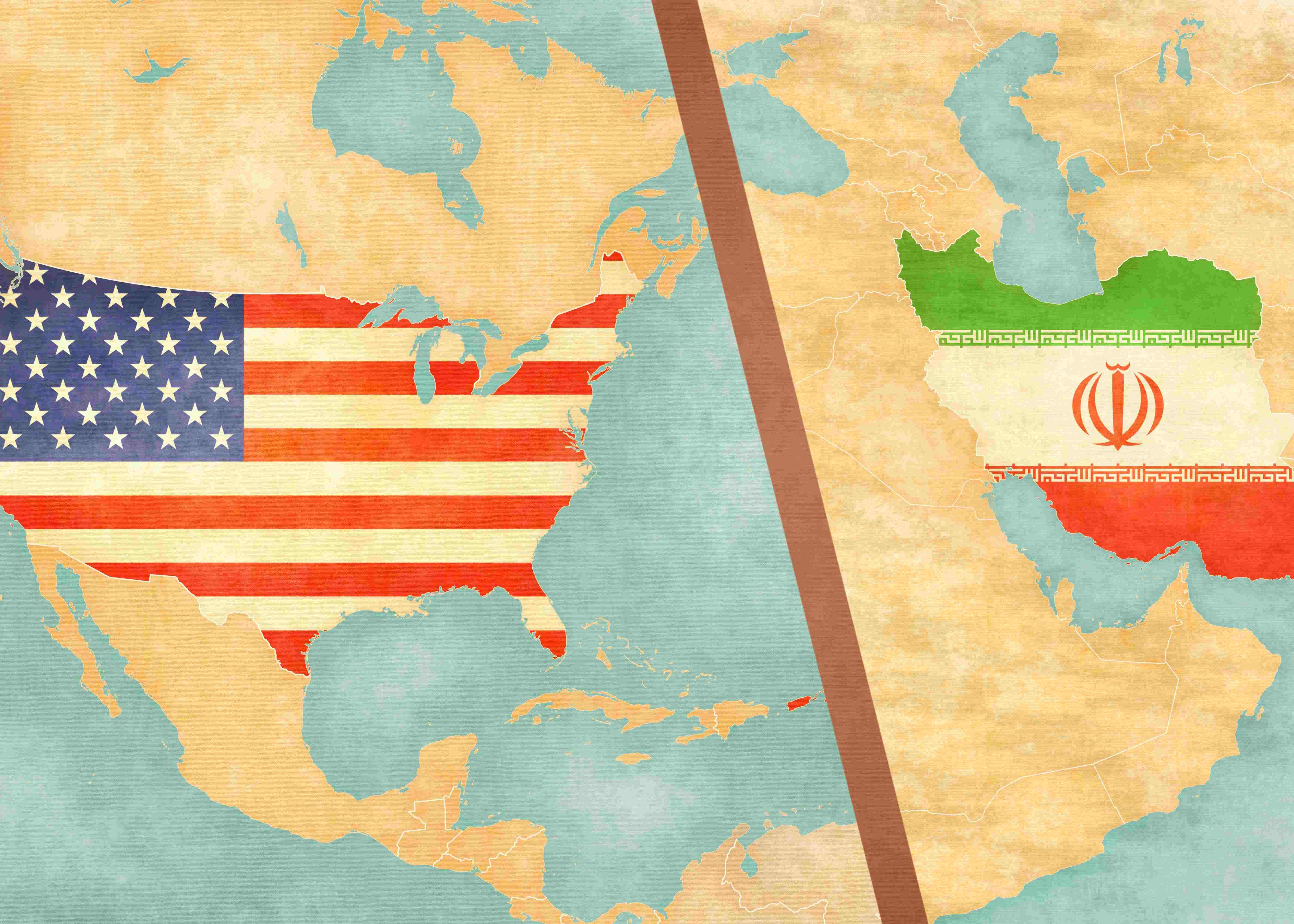
How should we make sense of the US decision under President Donald Trump to go to war alongside Israel against Iran at the end of February 2026? And how should we explain the durability of the conflict, despite Trump’s initial claim that it would last for only a month? One possible explanation is that the war reflects a failure of coercion, through both deterrence and compellence. These strategies constitute two sides of the same coin. Deterrence refers to an actor dissuading another from taking action; in this sense, it is conservative, in that it aims to maintain the status quo and is usually associated with the absence of war. Compellence, by contrast, refers to an actor pressuring another to undertake a particular course of action. It is therefore active, in that it seeks to change the status quo (Slantchev 2014, 4; Slantchev 2005).
Deterrence is generally understood to require less effort, although this requirement can increase substantially as the stakes, demands, and costs being threatened grow. By contrast, compellence typically requires greater effort, and any reduction in effort is more difficult to sustain when stakes and costs rise (Schaub 2004). Although the two strategies begin from different initial conditions and imply different objectives and assumptions about utility–namely, whether the target actor finds greater value in maintaining the status quo or in changing it–they nonetheless share several common requirements. These include knowledge of the adversary and its behavior, credible military capability, active monitoring, and at least some degree of shared communication and expectations (Echevarria 2024).
US DETERRENCE STRATEGY TOWARDS IRAN
In the case of US-Iran relations, both before and during the current war, the conditions often associated with deterrence and compellence–such as knowing the rival and its behavior, possessing a credible military threat combined with clear-eyed expectations–have repeatedly been absent. As Monshipouri and Boggio (2022) observe, US policy towards Iran over the past four decades has employed deterrence, initially oscillating between sanctions, diplomatic inducements and threats of military force. More recently, the US under Trump has opted for compellence, through the use of actual force in June 2025, and then again since February 2026. Yet across the period, the range of instruments deployed by the United States has been insufficient either to deter or compel Iran to limit its behavior in ways consistent with Washington’s objectives.
In part, this reflects a persistent disconnect in shared understanding and expectations between the two sides. The US and Iran have been strong adversaries since 1979, when the Revolution removed the Shah–an important regional ally of the United States–and established a radical and explicitly anti-Western Islamic Republic. The seizure of the US embassy and the hostage crisis exacerbated mutual suspicion and hostility (Rieffer-Flanagan 2013, 149).
Over subsequent decades, the two States became entrenched rivals with fundamentally different visions of the region and of each other. Iran sought to project influence as a means to secure regime survival. This reflected a realist logic in which perceived threats to the State elicited a hostile response (Rieffer-Flanagan 2013, 167). The United States, as the dominant regional power, favored preserving the regional status quo and adopted a containment strategy. These divergent grand strategies were further complicated by disagreements over Iran’s emerging nuclear program from the 1980s onwards. While Tehran framed the program as a civilian energy initiative, Washington interpreted it as a dual-use capability with inherent proliferation risks. The US response has therefore combined unilateral and multilateral sanctions, justified primarily through non-proliferation concerns.
However, sanctions produced only limited effects on Iran’s strategic behavior and pursuit of its nuclear program. Certainly, Iran has lost much-needed oil revenues and investment opportunities, but, in practical terms, the regime has offset many of the costs onto society rather than itself. It has also repeatedly used repression in order to contain public protest (Monshipouri & Boggio 2022).
That sanctions were having a limited impact on Iran was eventually acknowledged by the Obama administration. Between 2013 and 2015, the US and Iran undertook multilateral negotiations alongside Russia, China, Britain, France and Germany, resulting in the Joint Comprehensive Plan of Action (JCPOA). Under this agreement, sanctions were eased in exchange for limits on Iran’s nuclear program and enhanced international monitoring to ensure it remained compliant.
However, the JCPOA never commanded full political consensus within the United States, and it had nothing to say about limiting Iran’s regional ambitions, even as it froze its nuclear program. Having criticized the JCPOA as an election candidate in 2016, President Trump unilaterally withdrew from the agreement in 2018 and reinstated sanctions under a “maximum pressure” strategy. With the other signatories doing little to compensate for the loss of US participation or the costs associated with sanctions, Iran resumed uranium enrichment. Subsequent efforts by the Biden administration, which succeeded Trump in 2021, failed to revive the agreement.
THE SHIFT FROM DETERRENCE TO COMPELLENCE
From 1979 until 2025, US policy towards Iran had largely operated within a deterrence framework, combining sanctions, diplomacy, and implicit military threats (Monshipouri & Boggio 2022). For the US, the costs of such an approach were limited–which were politically welcome–even if its effect did little to curb Iran’s advancement of its nuclear program and contributing to growing frustration among policy hawks in Washington.
At the same time, US-Iran relations were operating within a wider regional system that was in a state of flux, especially in the past decade and a half. Across the Middle East, there were convulsions that played out in the decade that followed the uprisings across the Arab world in 2011; their effect was felt both within States and societies, resulting in both regime change and resistance, as well as through conflict and State actors seeking regional influence at the international level.
Among the regional powers seeking to reshape the region was Israel, Washington’s principal ally. Following the Hamas attacks of October 2023 and the subsequent Gaza war, Israeli leaders adopted a more permissive attitude towards the regional order. In early 2024, they expanded their war against Hamas to include direct confrontation with Iran through a series of limited strikes, which prompted a brief Iranian retaliation. Although the action was contained, a Rubicon had been crossed: in June 2025, Israel launched a more extensive bombing campaign aimed at degrading Iranian capabilities.
Although Trump initially opposed these strikes, he subsequently endorsed them, claiming they would eliminate Iran’s nuclear threat (Roth 2025). After 12 days of strikes, Washington and Tel Aviv declared success. However, a later assessment suggested that the operation had only produced a temporary setback to Iranian capabilities (Loft 2025).
Trump’s decision to participate in these strikes marked a shift in US strategy from deterrence to compellence. Having previously failed to persuade Iran not to act, the military action was intended to force Iran to change its behavior. At the same time, though, US military action had wider consequences, since it required greater material costs and effort by Washington. Initially, this was overlooked, since the US not only believed it had degraded Iran’s nuclear capabilities, but also because Iran’s response was muted, being limited to a single retaliatory missile attack on the US-operated Al Udeid Air Base in Qatar. Along with American action in Venezuela several months later, this contributed to a strong level of confidence in the White House ahead of the decision to begin the Iran war in February 2026.
In January 2026, the United States undertook a rapid military intervention in Venezuela, which led to the capture of President Nicolás Maduro and his extradition to New York on drug trafficking charges. Operationally, the intervention was a success: it combined intelligence preparation, covert deployment, and limited military force to achieve a narrowly defined objective at relatively low cost.
Almost immediately, a linkage between Maduro’s removal and possible future action against Iran was developing. Soon after the intervention, Kirsten Fontenrose, of the Scowcroft Middle East Institute, suggested that the action implied that the US was prepared to act decisively against leaders during periods of internal strain, rather than waiting for conditions to stabilize (Pelayo & Fontenrose 2026).
More problematic, the White House drew conclusions unsupported by evidence. Visibly impressed by the armed forces’ success, Trump portrayed the Venezuela operation as the beginning of a wider political transformation, including potential influence over Venezuela’s oil sector and domestic political order. But these expectations did not materialize: the United States did not occupy the country, and regime collapse did not occur. Instead, Maduro’s Vice President, Delcy Rodríguez, assumed leadership and, while relations with Washington became less confrontational, US influence remained limited. Trump’s key misreading then was that limited force could generate rapid regime destabilization and political transformation without sustained commitment. Nevertheless, this interpretation was subsequently transferred onto Iran (Citrinowicz 2026; Phillips 2026).
STRATEGIC MISCALCULATION AND IRANIAN ESCALATION
Despite the gap between US rhetoric and subsequent reality in Venezuela, when the US-Israeli strikes against Iran in February and early March 2026 began, they initially did seem to line up with Trump’s expectations. Military and nuclear infrastructure were damaged, and senior leadership figures were eliminated, including Supreme Leader Ali Khamenei.
However, those effects proved temporary and gave rise to far more damaging second-order consequences. Unlike Venezuela, Iran had both a capacity for retaliation and the will to use it, employing asymmetric capabilities to offset its conventional inferiority vis-à-vis the United States and enhance strategic leverage (Feldstein 2026; Warren 2026). It had long-term experience of operating under sanctions; it had access to ballistic missile forces and regional proxy networks that it could draw on; and it was geographically well placed to undertake maritime disruption, owing to its position astride the Strait of Hormuz.
Whereas Iran had responded in a limited manner to the strikes against it in June 2025, in March 2026, it chose to escalate. Rather than resorting to a symbolic strike against a single target, Iran instead widened the conflict by striking US and allied positions across several Gulf States and restricting maritime access through the Strait of Hormuz, imposing shipping tolls and threatening freedom of navigation. Although the possibility of closing the Strait of Hormuz had long been anticipated, Iran’s approach was more selective than expected. It restricted access for hostile actors while allowing passage for selected tankers (Ewers 2026).
The decision to seize and control access through the Strait of Hormuz transformed a regional war into one with global economic consequences. Prior to the conflict, approximately 20% of global oil and liquefied natural gas exports and up to 30% of fertilizer exports passed through the Strait of Hormuz (Butler, Mann & Jackson 2026; Welsh 2026). Disruption contributed to sharp price increases, with oil rising from US$60-70 per barrel to peaks approaching US$140. Although partially offset by increased production elsewhere, demand reduction, and the release of strategic reserves–particularly by China–longer-term consequences included heightened food insecurity, reduced agricultural output, and broader macroeconomic slowdown (Morrison 2026; Jack 2026). The IMF subsequently revised global growth forecasts downward under multiple scenarios (Gourinchas 2026).
Iranian strikes on US and allied targets in the Gulf employed both ballistic missiles and drones. The latter proved particularly significant, as they provided a low-cost means of exhausting the more expensive and costly US and Gulf interceptor missile stocks (The New Arab 2026). As the conflict escalated, the United States temporarily redeployed air defense systems from the Indo-Pacific to the Gulf, revealing a secondary strategic trade-off: reduced capacity to deter China in Asia in order to stabilize the Middle Eastern theatre (Lozano 2026).
Iran’s response to the US-Israeli war also bolstered and reinforced the regime. The initial leadership losses did not lead to regime fracture. Instead, there was a rapid internal restructuring, including the elevation of Khamenei’s son, Mojtaba, as Supreme Leader, and the consolidation of more hardline factions within the armed forces (Citrinowicz 2026). Domestically, the regime used the war to reinforce cohesion both within itself and in the country more widely. External attacks were exploited to generate a rally-around-the-flag effect, while opposition networks were weakened through repression justified under wartime emergency conditions (Malekian 2026). This dynamic reinforced an ongoing cycle of repression, which had increased in response to protests that began in December 2025. These earlier protests had been driven by economic grievances–sanctions, inflation, and currency depreciation–before expanding into broader political dissent prior to their suppression. Trump’s rhetorical support for the protesters during this period may have also worked against them, as it helped strengthen the regime’s narrative that the unrest was externally driven and manipulated.
In overall terms, the effect of the US-Israeli war against Iran has so far failed to compel Tehran either to rein in its nuclear program or to reconsider its regional ambitions. Instead, the US-Israeli attack has prompted Iran to escalate the conflict on several different fronts (Ewers 2026). Iran’s decision to opt for this path has imposed greater financial, military, relational and credibility costs on the US, ranging from resources and equipment to its regional alliances in the Gulf, given that they were not consulted before the decision to attack Iran and, through the Sandis, Bahrainis and Kuwaitis, have called for de-escalation. Beyond them, it has also challenged American stature as a military superpower.
TRUMP’S SEARCH FOR AN EXIT STRATEGY
Having opted for war and a strategy of compellence, the United States assumed the greater risks and costs required to force Iran to alter its behavior. Yet more than a month after Trump claimed the war would be brought to an end, the conflict had expanded: energy prices were rising, the Strait of Hormuz was largely closed to commercial shipping, and US Gulf allies remained under attack from Iranian missiles and drones. Under growing pressure to de-escalate, Washington reached a ceasefire with Iran in April, following mediation by Pakistan. The goal was to provide a cessation of hostilities ahead of negotiating a final and durable settlement. However, those efforts repeatedly stalled over fundamentally incompatible objectives: Iran demands the lifting of naval restrictions and release of frozen Iranian assets, compensation, guarantees against future strikes and an end to hostilities across all fronts. Meanwhile, the United States has insisted on the termination of nuclear enrichment, although even this position shifted towards proposals for temporary suspension (Singh 2026; Ordoñez 2026).
After signing the ceasefire, Trump's rhetoric oscillated between threats of catastrophic escalation if no agreement were reached and repeated declarations that a deal was imminent. In June, the United States and Iran signed a Memorandum of Understanding (MoU), establishing a framework for de-escalation and negotiations aimed at reaching a comprehensive settlement within 60 days. The agreement left key issues unresolved, most notably the future of Iran's nuclear program and the disposition of its enriched uranium. It also provided for the lifting of the US naval blockade, the reopening of the Strait of Hormuz to commercial shipping, and a US- and Gulf-backed US$300 billion package for Iran's reconstruction and economic development, alongside waivers on Iranian oil exports and renewed access to frozen assets and restricted funds (BBC 2026).
The MoU was met with widespread criticism because of the apparent imbalance in concessions. While the United States committed to significant economic and security measures, Iran made relatively few reciprocal commitments. Moreover, longstanding Trump administration concerns over Iran's ballistic missile program and its support for regional proxy groups were absent from the agreement (Kaplan 2026; Shepp 2026; Shabtai & Shamir 2026). The agreement proved little more durable than the ceasefire itself. Within days, Iran had again restricted shipping through the Strait of Hormuz, while both sides continued military operations across the region.
During the ceasefire period, Trump insisted that a comprehensive agreement was close, statements that often coincided with efforts to reassure financial markets. His willingness to accept a MoU widely perceived as unfavorable to the United States may reflect recognition that disruptions to oil and gas supplies, together with rising inflation, were imposing increasing domestic political costs, particularly in the run-up to the US congressional midterm elections (Shepp 2026). Yet Trump's shifting public statements, many delivered through social media, further weakened American credibility. Rather than reinforcing deterrence, they undermined confidence in US commitments, reduced opportunities for trust-building with Iran, and complicated parallel diplomatic efforts conducted by American and Iranian officials (Crew, Lumby & Sherman 2026; Spetalnick & Pamuk 2026).
Compounding Trump’s ongoing commentary over talks and a deal is a wider incoherence regarding overall US objectives. The resort to war has been variously framed by Trump and his officials as nuclear containment, regime change, regional rollback or domestic political signaling (Ordoñez 2026). Yet the choice to go to war in February 2026 was taken even though US and Iranian officials were already negotiating (Al Jazeera 2026). If nuclear containment was the objective, diplomacy was already underway. If regime change was the goal, then a plan of occupation was required and enacted–while acknowledging the difficulties of imposing and overseeing political change through external intervention, as happened in Iraq after 2003.
Perhaps Trump’s contradictory and erratic language and behavior would have been less consequential had he been operating within a more institutionalized system of decision-making at home. However, a defining feature of his presidency–particularly in its second term–has been increasing personalism. This has been enabled by the weakening of institutional constraints, including a deferential majority Republican Party in Congress and the erosion of parts of the civil service, including the State Department and USAID (Moynihan 2025). In the case of Iran, this was particularly evident in Republicans’ reluctance to challenge Trump over the decision to go to war–although following votes in both the Senate and House, the tide may be starting to turn (Menon & DePetris 2026).
CONCLUSION
From a broader perspective, the US strategy towards Iran under Trump represents a shift from deterrence to compellence after decades of oscillation between sanctions, diplomacy, and coercive signaling. None of these approaches generated stable credibility. Sanctions imposed costs but failed to alter Iran’s strategic trajectory, while diplomacy produced partial agreements that proved politically fragile, most notably the JCPOA. “Maximum pressure” further demonstrated that coercion without diplomatic engagement or clearly defined escalation thresholds encouraged Iranian adaptation rather than compliance.
The subsequent move to compellence has not resolved these underlying problems. Although US and Israeli strikes in 2026 inflicted significant damage on Iranian infrastructure and leadership, they did not achieve Washington’s broader objectives. Nuclear development was slowed but not eliminated, regime cohesion was preserved, and Iran retained its regional influence. Instead, Tehran expanded the scope of the conflict, most significantly by disrupting maritime access and energy flows in the Strait of Hormuz. American credibility was weakened further by the tension between escalating military pressure and Trump’s repeated efforts to end the conflict (Collinson 2026; Kagan 2026). Iran, despite suffering substantial losses, appears to have strengthened its bargaining position by broadening negotiations beyond the nuclear issue to include maritime access and economic concessions (Rahman 2026).
The central lesson is that compellence has increased the costs borne by the United States without producing corresponding political gains. Unlike deterrence, which seeks to prevent undesirable behavior by threatening consequences, compellence requires an adversary to alter existing policies despite its willingness to absorb costs. In the Iranian case, the United States demonstrated the capacity to inflict damage but failed to demonstrate the sustained commitment and strategic clarity necessary to compel compliance.
If Washington seeks to achieve the objectives associated with compellence, coercive theory suggests that it would require clearer objectives, credible escalation thresholds, and long-term political commitment. In practice, this would involve substantially greater military and political engagement, potentially including efforts to remove Iranian forces from the Strait of Hormuz or challenge regime control directly. Such options, however, require levels of domestic support and institutional commitment that are currently absent. Without a fundamental reassessment of strategy by either side, the most likely outcome remains continued instability, periodic escalation, and unresolved confrontation.
Author's Note: Generative AI was used for editing support, including language refinement, structural revision, and reference formatting. Responsibility for the article’s arguments, evidence, and interpretations rests solely with the author.
References
Al Jazeera. 2026. “US, Israel Bomb Iran: A Timeline of Talks and Threats Leading Up to Attacks.” Al Jazeera, February 28, 2026. https://www.aljazeera.com/news/2026/2/28/us-israel-bomb-iran-a-timeline-of-talks-and-threats-leading-up-to-attacks.
BBC. 2026. “US-Iran Memorandum of Understanding in Full.” BBC, June 18, 2026. https://www.bbc.com/news/articles/c4gy700j0eko.
Butler, Gavin, Toby Mann & Patrick Jackson. 2026. “Why the Strait of Hormuz Matters So Much in the Iran War.” BBC News, April 8, 2026. https://www.bbc.com/news/articles/c78n6p09pzno.
Citrinowicz, Danny. 2026. “How the War Saved the Iranian Regime.” Foreign Affairs, April 29, 2026. https://www.foreignaffairs.com/iran/how-war-saved-iranian-regime.
Collinson, Stephen. 2026. “Trump Is Trapped by His Own Strategy as He Grapples for an Exit in Iran.” CNN, May 7, 2026. https://edition.cnn.com/2026/05/07/politics/trump-iran-war-exit-strategy-analysis.
Crew, Jemma, Tommy Lumby & Natalie Sherman. 2026. “How Trump and the Oil Markets Move in Sync: A Tango in Five Charts.” BBC News, March 31, 2026. https://www.bbc.com/news/articles/cvgk8zk9epgo.
Echevarría, Antulio. 2024. Military Strategy: A Very Short Introduction. 2nd ed. Oxford: Oxford University Press.
Ewers, Elisa. 2026. “How the Iran War Confirmed, Contradicted, and Complicated U.S. Policy.” Council on Foreign Relations, April 15, 2026. https://www.cfr.org/articles/how-the-iran-war-confirmed-contradicted-and-complicated-u-s-policy.
Feldstein, Steven. 2026. “The Unintended Consequences of Iran’s Asymmetric Strategy and America’s AI War.” Carnegie Endowment for International Peace, May 13, 2026. https://carnegieendowment.org/research/2026/05/the-unintended-consequences-of-irans-asymmetric-strategy-and-americas-ai-war.
Gourinchas, Pierre-Olivier. 2026. “War Darkens Global Economic Outlook and Reshapes Policy Priorities.” IMF Blog, April 14, 2026. https://www.imf.org/en/blogs/articles/2026/04/14/war-darkens-global-economic-outlook-and-reshapes-policy-priorities.
Jack, Simon. 2026. “Billions of Meals at Risk Due to Iran War, Says Fertilizer Boss.” BBC News, May 1, 2026. https://www.bbc.com/news/articles/cpwp50v4ye7o.
Kaplan, Fred. 2026. “The Text of Trump’s Iran Deal Is Out. It’s Worse Than I Thought.” Slate, June 17, 2026. https://slate.com/news-and-politics/2026/06/trump-iran-deal-war-news-hormuz-mou.html.
Loft, Philip. 2025. “Iran: Impacts of June 2025 Israel and US Strikes and Outlook.” House of Commons Library Research Briefing 10292, July 22, 2025. conclusions https://commonslibrary.parliament.uk/research-briefings/cbp-10292/.
Lozano, Larissa Alves. 2026. “A Neglected Nuclear Umbrella: Asia Proliferation Fears Amidst US-Iran Redeployments.” Bloomsbury Intelligence Security Institute, April 13, 2026. https://bisi.org.uk/reports/a-neglected-nuclear-umbrella-asia-proliferation-fears-amidst-us-iran-redeployments.
Malekian, Somayeh. 2026. “Iran Escalates Crackdown on Dissent as Arrests, Executions and Threats Surge, Observers Say.” ABC News, April 20, 2026. https://abcnews.go.com/International/iran-escalates-crackdown-dissent-arrests-executions-threats-surge/story?id=132195741.
Menon, Rajan & Daniel DePetris. 2026. “Republicans in Congress are Defecting from Trump over Iran. Will More Follow?” The Guardian, 8 June, 2026. https://www.theguardian.com/commentisfree/2026/jun/08/republicans-trump-iran-war-powers-resolution.
Monshipouri, Mahmood & Giorgio Davide Boggio. 2022. “Sanctions, Deterrence, Regime Change: A New Look at US-Iran Relations.” Middle East Policy 29 (4): 26-44. https://doi.org/10.1111/mepo.12661.
Morrison, Kevin. 2026. “4 Reasons the ‘Largest Energy Crisis’ on Record Has Been Held at Bay–And Why There’s Pain to Come.” The Conversation, May 21, 2026. https://theconversation.com/4-reasons-the-largest-energy-crisis-on-record-has-been-held-at-bay-and-why-theres-pain-to-come-283148.
Moynihan, Donald. 2025. “The Personalist Presidency.” Can We Still Govern? February 18, 2025. https://donmoynihan.substack.com/p/the-personalist-presidency.
Ordoñez, Franco. 2026. “Trump Shifts Position Again on Iran Talks.” NPR, March 20, 2026.
Pelayo, José & Kirsten Fontenrose. “The Venezuela-Iran Connection and What Maduro’s Capture Means for Tehran, Explained.” Atlantic Council, January 12, 2026. https://www.atlanticcouncil.org/blogs/menasource/the-venezuela-iran-connection-and-what-maduros-capture-means-for-tehran-explained/.
Phillips, Tom. 2026. “Trump ‘Reaping Bitter Fruit’ of Thinking Iran Intervention as Easy as Venezuela, Says Former Diplomat.” The Guardian, April 10, 2026. https://www.theguardian.com/world/2026/apr/10/trump-iran-intervention-easy-as-venezuela-maduro-capture-john-feeley.
Rahman, Omar. 2026. “Can Trump Escape from a Negotiation Trap of His Own Making?” Middle East Council on Global Affairs, May 21, 2026. https://mecouncil.org/blog_posts/can-trump-escape-from-a-negotiation-trap-of-his-own-making/.
Rieffer-Flanagan, Barbara. 2013. Evolving Iran: An Introduction to Politics and Problems in the Islamic Republic. Washington, DC: Georgetown University Press.
Roth, Andrew. 2025. “Trump Scrambles to Claim Credit for Israel’s Iran Attack He Publicly Opposed.” The Guardian, June 13, 2025. https://www.theguardian.com/us-news/2025/jun/13/trump-iran-israel-attacks-response.
Schaub, Gary Jr. 2004. “Deterrence, Compellence, and Prospect Theory.” Political Psychology 25 (3): 389-411. https://doi.org/10.1111/j.1467-9221.2004.00377.x.
Shabtai, Shay & Eitan Shamir. 2026. “The Implications of the US-Iran Memorandum of Understanding and Its Consequences for Israel.” BESA Center Perspectives Paper 2 (391), July 5, 2026. https://besacenter.org/the-implications-of-the-us-iran-memorandum-of-understanding-and-its-consequences-for-israel/.
Shepp, Jonah. 2026. “Even Trump Can’t Sell This Crappy Iran Deal. No amount of blowhard spin can make this into a win.” New York Magazine, June 19, 2026. https://nymag.com/intelligencer/article/even-trump-cant-sell-this-crappy-iran-deal.html.
Singh, Kanishka. 2026. “How Trump’s Stated Reasons, Goals and Timeline for Iran War Have Shifted.” Reuters, March 20, 2026. https://www.reuters.com/world/middle-east/how-trumps-stated-reasons-goals-timeline-iran-war-have-shifted-2026-03-20/.
Spetalnick, Matt & Humeyra Pamuk. 2026. “Trump’s Geopolitical Brinkmanship Has Hit a Wall with Iran.” Reuters, May 16, 2026. https://www.reuters.com/world/middle-east/trumps-geopolitical-brinkmanship-has-hit-wall-with-iran-2026-05-16/.
Slantchev, Branislav. 2005. “Introduction to International Relations Lecture 8: Deterrence and Compellence.” Department of Political Science, University of California–San Diego, May 2, 2005. http://slantchev.ucsd.edu/courses/ps12/08-deterrence-and-compellence.pdf.
Slantchev, Branislav. 2014. “U.S. Foreign Policy: Deterrence and Compellence”. Department of Political Science, University of California–San Diego, July 9, 2014. http://slantchev.ucsd.edu/courses/usfp/03%20Deterrence%20and%20Compellence.pdf.
The New Arab. 2026. “Gulf Allies Turn to Ukraine, UK, and Asia as Ammunition Runs Low.” The New Arab, April 14, 2026. https://www.newarab.com/news/gulf-allies-turn-ukraine-uk-and-asia-ammunition-runs-low.
Warren, Spencer. 2026. “A Conflict of Attrition: Iran’s Bet on Asymmetric Warfare.” Bulletin of the Atomic Scientists, April 7, 2026. https://thebulletin.org/2026/04/a-conflict-of-attrition-irans-bet-on-asymmetric-warfare/.
Welsh, Caitlin. 2026. “Iran, Fertilizer, and Food Security: Risks, Impacts, and Policy Responses.” Center for Strategic and International Studies, April 1, 2026. https://www.csis.org/analysis/iran-fertilizer-and-food-security-risks-impacts-and-policy-responses.
Submitted: June 13, 2026
Accepted for publication: July 2, 2026
DOI: https://doi.org/10.54827/issn2764-7897.cebri2026.17.03.04.183-197.en
Copyright © 2026 CEBRI-Journal. This is an Open Access article distributed under the terms of the Creative Commons Attribution License, which permits unrestricted use, distribution, and reproduction in any medium, provided the original article is properly cited.
