

-

-

-
 PT | EN
PT | EN 
This article examines the reconstruction of the Venezuelan state following the political reconfiguration initiated on January 3, 2026, after the US military intervention, using the June 24 earthquake as evidence of accumulated institutional weaknesses. It argues that the legitimacy of the new political order will depend less on economic recovery than on rebuilding state capacity to guarantee welfare, protection, and rights. The article warns of the risks of an asymmetric reconstruction, in which economic stabilization advances more rapidly than institutional strengthening.
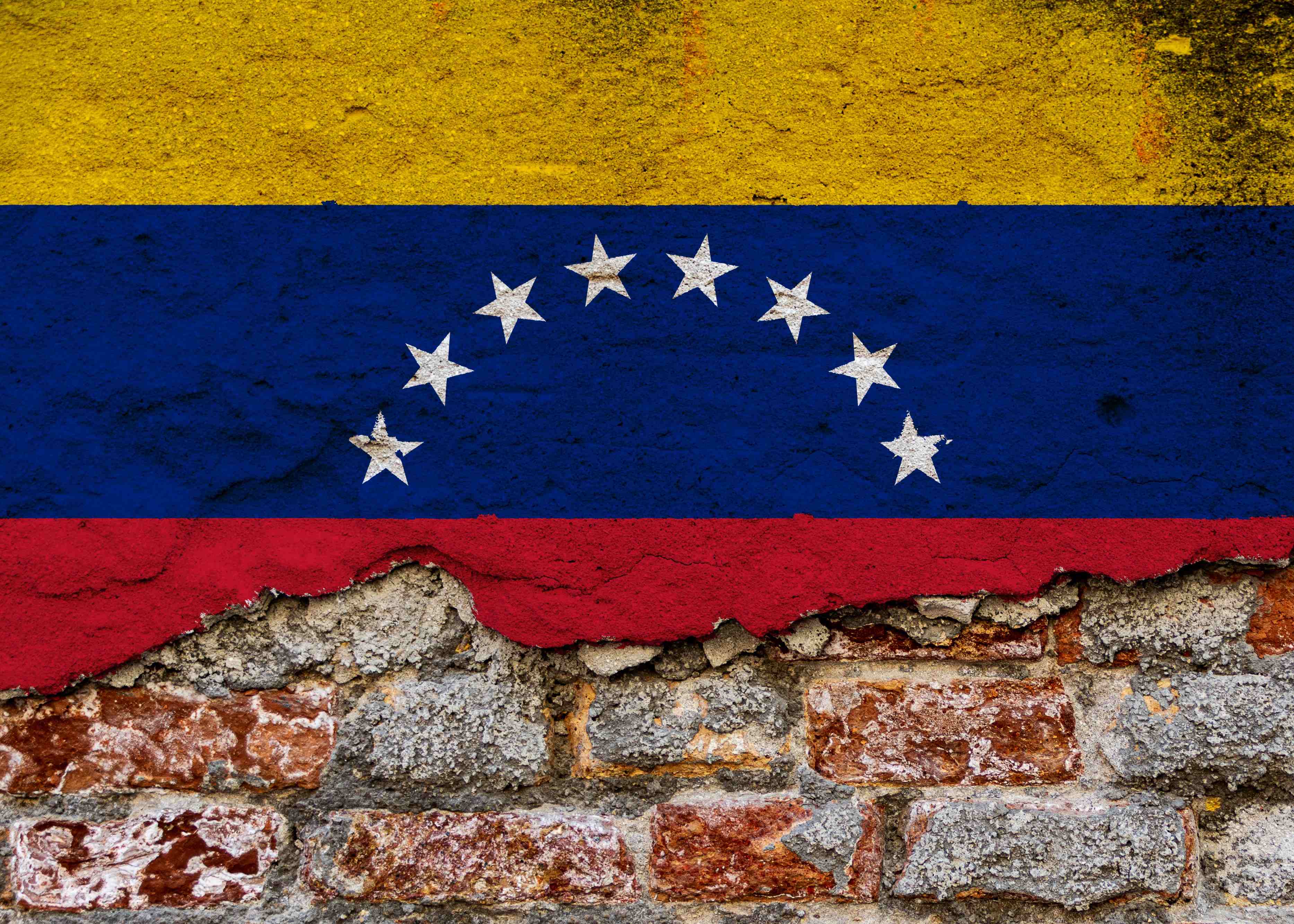
On June 24, 2026, two earthquakes measuring magnitudes 7.2 and 7.5 struck northern Venezuela (USGS 2026a; 2026b). The disaster left thousands dead and injured, displaced entire communities, and triggered a humanitarian emergency of unprecedented proportions. As of July 5, 2026, the official death toll had risen to 3,342 fatalities and 16,740 injured, while Venezuelan authorities continued to withhold an official estimate of the number of missing persons, indicating that the full human impact of the disaster had yet to be determined (Deutsche Welle 2026). Beyond destroying homes, hospitals, and critical infrastructure, the disaster exposed something far deeper: the true state of the country's institutional capacities.
Natural disasters possess a particular quality that makes them an exceptional test for any government. They suspend ideological disputes, render political narratives irrelevant, and demand an immediate, effective response. Within hours, a country's strength ceases to be measured by its macroeconomic indicators or by the discourse of its leaders, and, instead, comes to depend on its capacity to coordinate rescue teams, keep hospitals operating, guarantee communications, restore public services, and protect the population. Where that capacity exists, lives are saved; where it has been eroded, the disaster multiplies its consequences.
The earthquake turned into evidence a reality that had remained partially hidden for years behind Venezuela's political debate. The country's crisis was never exclusively economic, nor strictly political. It was, above all, a crisis of State capacity (Fukuyama 2004; Evans, Rueschemeyer & Skocpol 1985; Migdal 1988). Decades of concentrated power, the partisan capture of public administration, corruption, bureaucratic de-professionalization, deteriorating infrastructure, and the abandonment of public services ended up undermining the government's most elementary function: protecting its citizens (Olson 1993).
This analysis begins from a fact that completely altered the Venezuelan political scenario. The military action carried out by the United States on January 3, 2026, which culminated in the capture of Nicolás Maduro, opened an unprecedented phase of political reconfiguration (Hill et al. 2026). Without that event, there would hardly be a debate today about the reconstruction of the Venezuelan State. Every opportunity, tension, and challenge the country now faces must be understood in light of that new reality.
However, political change is not, in itself, equivalent to institutional reconstruction. The substitution of the center of power opened the possibility of redefining the country's course, but it did not automatically alter the State's capacity to guarantee welfare, rights, and social protection. That distinction is decisive for understanding the current moment.
There is, moreover, a second tension shaping the process. Although the government that emerged after the US intervention operates under a new architecture of power and a clear political and military tutelage from Washington, many of those who today administer Venezuela's institutional order held positions of high responsibility during the government of Nicolás Maduro. They are the same actors who took part in running the State apparatus during the period of the greatest institutional deterioration in the country's contemporary history, and under whose management the destruction of public services, the collapse of social protection, and the sustained loss of quality of life for millions of Venezuelans deepened.
This continuity is not merely a political particularity; it represents one of the principal challenges of reconstruction. For the first time, institutional recovery rests, to a considerable degree, on actors who were also responsible for administering the process of State degradation. The legitimacy of the new cycle will therefore depend not only on the stability it manages to produce, but on its capacity to reverse the consequences of decisions that many of its own leaders helped to consolidate.
That is the starting point of this reflection. The discussion about Venezuela can no longer be limited to explaining how a political cycle ended. The decisive question is another: is the process opened on January 3 reconstructing the Venezuelan State, or is it merely reorganizing the exercise of power over an institutional apparatus that remains profoundly weakened? The answer will determine not only the viability of economic recovery, but also the legitimacy of the new political order now emerging–because a society does not begin to rebuild itself when whoever governs changes, but when the State recovers the capacity to protect its citizens.
THE CONTINUITY OF GOVERNANCE UNDER A NEW TUTELAGE
The capture of Nicolás Maduro abruptly altered Venezuela's political balance. Beyond the legal or geopolitical debates that an operation of this nature inevitably provokes, it produced one fact that is difficult to dispute: it shifted the effective center of decision-making from Caracas to Washington (Hill et al. 2026). The political reconfiguration that followed the US military intervention inaugurated an unprecedented stage in the country's recent history, marked by a government that operates under North American tutelage and whose stability depends, to a considerable extent, on the political, economic, and military backing of the United States.
This new context opened opportunities that had seemed unreachable only a few months earlier. The easing of sanctions, the recovery of the energy sector, the reestablishment of relations with international actors, and the expectation of greater foreign investment began to shape a scenario of economic stabilization unimaginable during the final years of the Maduro administration. From a pragmatic standpoint, this strategy is understandable. After an extended economic contraction, Venezuela needs to recover revenue, rebuild its fiscal capacity, and reestablish minimum conditions to finance any national project.
Yet economic recovery does not exhaust the problem of reconstruction. The real challenge lies in determining whether this process is accompanied by an equivalent reconstruction of the State's institutional capacities, or whether, on the contrary, the reorganization of power is advancing faster than the transformation of institutions.
The continuity of much of the governing elite compels this question. Although the country's political leadership now responds to a new balance of forces, numerous actors occupying leadership positions in the current government also took part in administering the State during the cycle led by Nicolás Maduro. These are not simply officials who remained in their posts for technical or administrative reasons. In many cases, they were responsible for designing, implementing, or backing the political decisions that accompanied institutional deterioration, the weakening of public services, the loss of State capacities, and the progressive impoverishment of Venezuelan society.
This circumstance introduces a tension rarely seen in processes of national reconstruction. In other historical experiences, regime change was accompanied by a significant renewal of the elites responsible for leading the process (Ghani & Lockhart 2008). In Venezuela, by contrast, reconstruction begins with substantial administrative and political continuity. The result is paradoxical: those now responsible for rebuilding the State are, to a considerable degree, those who took part in administering the State whose degradation made that reconstruction necessary.
Rebuilding a State requires reviewing the practices, priorities, and forms of management that led to its weakening. When those responsible for driving that process belong to the same political structures that administered the deterioration, the legitimacy of reconstruction will depend less on rhetoric and much more on the capacity to produce tangible changes in how the State functions.
It is precisely at this point that the concept of asymmetric reconstruction emerges–a category, developed in this analysis, that describes a process in which geopolitical and economic stabilization advances faster than the reconstruction of the State capacities needed to guarantee welfare, rights, and citizen protection (cf. Paris & Sisk 2009; Ghani & Lockhart 2008). It does not suggest that the two dimensions are incompatible, nor does it question the need to recover the Venezuelan economy. On the contrary, it recognizes that without growth, investment, and fiscal stability, it will be very difficult to rebuild hospitals, schools, infrastructure, or social protection systems. The warning is different: when economic recovery becomes the principal indicator of success, there is a risk of relegating institutional reconstruction to a secondary level.
This risk is especially relevant in Venezuela. The crisis destroyed not only the country's productive capacity; it weakened the institutions responsible for converting economic resources into public goods. An increase in oil production may improve the national accounts, but it does not, by itself, rebuild a hospital system, professionalize public administration, strengthen the Judiciary, nor restore trust between citizens and the State–what Michael Mann calls the State's infrastructural power to actually implement its decisions across society (Mann 1984). Such transformations require political decisions, institutional reforms, and a conception of reconstruction that goes beyond macroeconomic stabilization.
History shows that numerous national recovery processes failed precisely because they confused these two dimensions. They rebuilt the economy without rebuilding the State (Fukuyama 2004; Ghani & Lockhart 2008). Venezuela today faces the opportunity–and the responsibility–to avoid that mistake. The success of the new political cycle will not depend solely on how quickly investment returns or exports rise, but on its capacity to convert that recovery into institutions that are more effective, more professional, and more oriented toward the population's welfare.
Only then will it be possible to sustain that the country is undergoing a genuine reconstruction, and not simply a new administration of the same structural weaknesses.
WELFARE AS A CRITERION OF LEGITIMACY
National reconstructions are usually assessed by the speed with which they restore economic growth, stabilize political institutions, or reestablish market confidence. Yet these indicators, however relevant, say little about citizens' everyday experience. States do not gain legitimacy because they improve their macroeconomic figures, but because they demonstrate that they are capable of protecting people, guaranteeing rights, and expanding their opportunities in life (Rothstein 1998; Rosanvallon 2011).
This distinction is particularly important for Venezuela. After more than two decades of institutional deterioration, the challenge is not merely to recover the country's productive capacity, but to rebuild the institutions that make it possible to translate that recovery into collective welfare. In the absence of that mediation, economic growth risks becoming a statistical improvement with no equivalent translation into the population's quality of life.
Latin American experience offers multiple examples of this tension. In recent decades, several countries went through periods of economic expansion that coexisted with deep inequality, precarious public services, and persistent distrust of institutions (CEPAL 2016; Huber & Stephens 2012). Growth alone did not produce more cohesive societies or more legitimate States. Wherever economic strengthening was not accompanied by an effective expansion of State capacities, prosperity ended up being distributed unevenly, and democratic legitimacy remained fragile.
Venezuela faces this same challenge today, though from a far more critical starting point. The accumulated destruction of the health system, the deterioration of public education, the collapse of infrastructure, the precarization of public administration, and the loss of social protection mechanisms are not sectoral problems. Multidimensional poverty–driven increasingly by deficient housing, public services, and education rather than by income alone–still affects 55% of the population, 16 points above 2014 levels, even as monetary poverty has eased (ENCOVI 2026). They are manifestations of a single phenomenon: the progressive weakening of the State as guarantor of citizens' welfare.
For this reason, reconstruction should not be understood solely as a process of economic recovery, but as a strategy to rebuild State capacities. Hospitals that function, schools capable of forming human capital, reliable judicial systems, stable public services, civil-protection agencies prepared to respond to emergencies, and professional administrations are not isolated policies. They constitute the institutional infrastructure of welfare on which the legitimacy of any contemporary democracy rests.
The June earthquake made this reality exceptionally clear. In the midst of the emergency, debates over growth, investment, or oil production ceased to matter. The question became far more elementary: did the State have the capacity to protect the population? The answer depended on the existence of functioning institutions, trained personnel, resilient infrastructure, and effective coordination mechanisms (Cohen & Werker 2008). At that moment it became evident that a nation's true strategic asset is not only its natural resources or export capacity, but the strength of the institutions charged with preserving life and reducing social vulnerability.
From this perspective, welfare ceases to be merely one public policy among many and becomes the principal criterion of legitimacy for the new political order. A government can stabilize the economy, attract investment, and restore growth. But if citizens continue to face collapsed hospitals, deteriorated schools, intermittent public services, and a State incapable of responding to a crisis, reconstruction will remain incomplete.
This assertion takes on particular importance in the Venezuelan context. The military intervention of January 3 opened an unprecedented opportunity to reorganize political power and revive the economy. That opportunity will only be consolidated if it translates into a verifiable transformation of State capacities. Otherwise, the new political architecture risks reproducing a common paradox of post-crisis processes: rebuilding the economy without fully rebuilding the State.
Ultimately, the legitimacy of the new cycle will not depend on the scale of foreign investment or the number of barrels of oil exported. It will depend on something far more demanding: that citizens once again experience the State as an institution capable of protecting them, offering them opportunities, and responding effectively when their security and welfare are at risk.
REBUILDING INSTITUTIONS FOR HUMAN DIGNITY
Venezuela's reconstruction has only just begun, and it would be premature to anticipate its results. The US military intervention of January 3 irreversibly altered the balance of forces, opened a political scenario unthinkable only months earlier, and created conditions to begin the country's economic recovery (Hill et al. 2026). This new reality undoubtedly constitutes a historic opportunity. But every opportunity also redefines the criteria by which it will be judged.
For years, Venezuela's debate was dominated by a single question: how to bring about political change. Today the question is different. The issue is no longer only who holds power, but what kind of State is beginning to be built. That shift is decisive, because societies do not consolidate their recovery when a government changes, but when institutions regain the capacity to fulfill the functions they were meant for
In this context, economic stabilization represents a necessary but not sufficient condition. Venezuela needs investment, growth, and a sustained recovery of its productive capacity to finance national reconstruction. Without those resources, it will be impossible to rebuild hospitals, schools, infrastructure, civil-protection systems, or a professional public administration. However, treating economic recovery as the principal indicator of political success would mean confusing the instrument with the objective.
True reconstruction will begin when growth translates into State capacities. When investment rebuilds institutions and not merely fiscal balances. When the recovery of the energy sector strengthens education, health, infrastructure, and social protection. In short, when the economy once again serves the State, and the State once again serves society.
This challenge takes on an even greater dimension because of the nature of the Venezuelan political process itself. Reconstruction is not being led by an entirely new generation of leaders, but, to a considerable degree, by actors who held positions of responsibility during the period of the country's greatest institutional deterioration. This continuity makes reconstruction a far more demanding political requirement. It will not be enough to administer the existing State better; it will be necessary to demonstrate the capacity to transform the practices, priorities, and outcomes of an institutional apparatus whose degradation these same actors helped to administer.
The legitimacy of the new order will depend precisely on that capacity. Not on official statements, not on international recognition, not even on the political stability that may be achieved, but on everyday evidence that the State once again protects its citizens and expands their opportunities in life.
The earthquake of June 24 offered a lesson that transcends the Venezuelan case. Natural disasters strip away the fictions on which political legitimacy is often built (Cohen & Werker 2008). When a society faces an emergency of great magnitude, slogans, partisan identities, and ideological disputes disappear. Only one question remains: is the State capable of protecting its population? The answer never depends on rhetoric. It depends exclusively on the strength of its institutions.
Perhaps that is also the main lesson for Latin America. In an international context marked by geopolitical competition, the energy transition, technological acceleration, and growing political fragmentation, States will increasingly be judged less by their capacity to generate growth than by their capacity to reduce their societies' vulnerability. Democratic legitimacy will depend more and more on the ability to offer security, welfare, and protection against increasingly complex risks.
From this perspective, the Venezuelan case is more than a political transition. It represents a laboratory for observing whether it is possible to rebuild a State after a long process of institutional collapse without reproducing the very logic that led to that deterioration.
The success of the political reconfiguration that started on January 3 will not be remembered solely for having ended a cycle of power. It will be judged by a far more demanding question: whether it managed to rebuild a State that once again cared for its society–because, ultimately, that is the difference between managing an economic recovery and truly rebuilding a nation.
References
Cohen, Charles & Eric D. Werker. 2008. “The Political Economy of 'Natural' Disasters.” Journal of Conflict Resolution 52 (6): 795-819. https://www.jstor.org/stable/27638641.
Comisión Económica para América Latina y el Caribe (CEPAL). 2016. La matriz de la desigualdad social en América Latina. Santiago: United Nations. https://www.cepal.org/es/publicaciones/40668-la-matriz-la-desigualdad-social-america-latina.
ENCOVI. 2026. “Encuesta Nacional de Condiciones de Vida 2025.” Instituto de Investigaciones Económicas y Sociales (IIES-UCAB). https://www.proyectoencovi.com.
Evans, Peter, Dietrich Rueschemeyer & Theda Skocpol. 1985. Bringing the State Back In. Cambridge: Cambridge University Press.
Fukuyama, Francis. 2004. State-Building: Governance and World Order in the 21st Century. Ithaca, NY: Cornell University Press.
Ghani, Ashraf & Clare Lockhart. 2008. Fixing Failed States: A Framework for Rebuilding a Fractured World. Oxford: Oxford University Press.
Hill, Evan, Joyce S. Lee, Alex Horton, Jarrett Ley, Adrián Blanco Ramos & Tim Meko. 2026. “How the Military Operation to Capture Maduro Unfolded.” The Washington Post, January 3, 2026. https://www.washingtonpost.com/world/2026/01/03/maduro-capture-venezuela-visuals/.
Huber, Evelyne & John D. Stephens. 2012. Democracy and the Left: Social Policy and Inequality in Latin America. Chicago: University of Chicago Press.
Mann, Michael. 1984. “The Autonomous Power of the State: Its Origins, Mechanisms and Results.” European Journal of Sociology 25 (2): 185-213. https://www.jstor.org/stable/23999270.
Migdal, Joel S. 1988. Strong Societies and Weak States: State-Society Relations and State Capabilities in the Third World. Princeton, NJ: Princeton University Press.
Olson, Mancur. 1993. “Dictatorship, Democracy, and Development.” American Political Science Review 87 (3): 567-576. https://doi.org/10.2307/2938736.
Paris, Roland & Timothy D. Sisk. 2009. The Dilemmas of Statebuilding: Confronting the Contradictions of Postwar Peace Operations. London: Routledge.
Rosanvallon, Pierre. 2011. Democratic Legitimacy: Impartiality, Reflexivity, Proximity. Princeton, NJ: Princeton University Press.
Rothstein, Bo. 1998. Just Institutions Matter: The Moral and Political Logic of the Universal Welfare State. Cambridge: Cambridge University Press.
United Nations Office for the Coordination of Humanitarian Affairs (OCHA). 2026. “Earthquakes in Venezuela: Situation Report No. 8 (1 July 2026, 7:00 pm).” OCHA, July 2, 2026. https://www.unocha.org/publications/report/venezuela-bolivarian-republic/earthquakes-venezuela-situation-report-no-8-01-july-2026-time-0700-pm.
United States Geological Survey (USGS). 2026a. “M 7.2 - 21 km ENE of San Felipe, Venezuela.” Earthquake’s Hazard Program. https://earthquake.usgs.gov/earthquakes/browse/significant.php.
United States Geological Survey (USGS). 2026b. “M 7.5 - 20 km ESE of Yumare, Venezuela.” Earthquake’s Hazard Program. https://earthquake.usgs.gov/earthquakes/eventpage/us6000t7zp/executive.
Submitted: July 6, 2026.
Accepted for publication: July 15, 2026
DOI: https://doi.org/10.54827/issn2764-7897.cebri2026.17.02.05.89-100.en
Copyright © 2026 CEBRI-Journal. This is an Open Access article distributed under the terms of the Creative Commons Attribution License, which permits unrestricted use, distribution, and reproduction in any medium, provided the original article is properly cited.
